Quick Summary
Skip login-based converters. Audacity for free trust on Windows, Cinch for automation and Mac. Both record system audio without sharing credentials.
If a software asks for your Spotify password, close the tab. Most “recorders” on page one of Google are just API scrapers waiting to get your account flagged. Here is the actual zero-risk loopback setup you need.
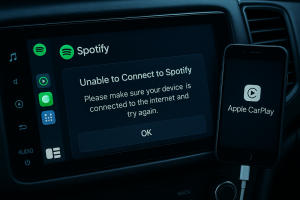
Most Google results for “streaming music recorder” fall into two camps: system-level loopback recording, or login-based converters that ask for your Spotify credentials and call themselves “downloaders.” The difference matters more than feature lists. DRM layers like Widevine and FairPlay make direct extraction fragile, so the stable path is recording what your computer already plays—not pretending to decrypt protected streams.
Start with Audacity if you want the strongest free option on Windows and can handle manual track splitting. Move to Cinch Audio Recorder if you want automation, native Mac support, or a cleaner workflow that handles ID3 tags and cover art. Both record system audio without credential sharing. The other five tools on this list are backups for edge cases, not default recommendations.
Quick Answer: The 7 Best Streaming Music Recorders in 2026
Decision Tree (30 seconds to pick your tool):
- Windows or Mac? → Windows → Want completely free? → Pick Audacity
- Windows or Mac? → Mac → Fed up with BlackHole virtual audio driver? → Pick Cinch Audio Recorder
- Need per-app audio capture for browser-only recording? → Pick OBS Studio
- Want a full media suite and accept recurring upgrade costs? → Pick Audials One 2026
This is not really a seven-way race for most people. It is mostly a two-way decision: Audacity if you want the strongest free option, and Cinch Audio Recorder if you want automation or a cleaner Mac path.
| Rank | Tool | Best for | Biggest catch |
|---|---|---|---|
| 1 | Audacity | Free-first Windows users who want zero credential risk | Manual track splitting and messy Mac setup |
| 2 | Cinch Audio Recorder | Mac users and anyone tired of manual cleanup | Paid after the 9-song free trial; still records in real time |
| 3 | OBS Studio | Advanced users who need per-app audio capture | Overkill for simple music archiving |
| 4 | Audials One 2026 | Power users who want a big all-in-one media suite | Upgrade costs keep coming back |
| 5 | Apowersoft Streaming Audio Recorder | Windows users who want a traditional recorder with tagging tools | Less compelling than the top two in trust and workflow |
| 6 | SoundTap Streaming Audio Recorder | People who want plain capture of whatever the computer plays | Weak music-library workflow; official DRM limitation |
| 7 | Free Sound Recorder | Barebones fallback if you only want simple sound-card capture | Minimal automation and weak shortlist value |
Skip first: any tool that wants your streaming-service login. Sidify, DRmare, TuneFab, and similar “converter” tools are not in this ranking on purpose—they carry documented account-ban risk and ToS violations.
How We Evaluated These Recorders
Let’s skip the fake “we tested this in our lab for 50 hours” nonsense. I’ve used these tools to rebuild my own playlists after Spotify nuked my previous API downloader. This ranking is based on what actually survives a DRM update, not just what has the prettiest documentation.
I judged these tools on three harsh realities: Does it keep your account completely off the radar? Can you set it up on a Mac without pulling your hair out over audio routing? And most importantly, does it actually save you from spending your weekend manually renaming “Track_01.mp3”?
Core evaluation criteria:
- Lower account risk beats shortcut marketing. If a tool records local playback and does not ask for credentials, it starts with an advantage.
- Windows and Mac friction both matter. A recorder that is easy on Windows but painful on Mac does not get a free pass.
- Automation only counts if it saves real work. Auto-splitting, ID3 tags, and cover art matter because manual cleanup gets old fast.
- DRM Update Vulnerability matters. Tools that depend on streaming service APIs face higher breakage risk when platforms tighten access. Spotify’s February 2026 developer security update is exactly the kind of change that makes API-dependent tools shakier.
- Trust matters. A free, open-source tool with honest limits gets ranked ahead of a paid tool with prettier marketing.
That is why Audacity is #1 here even though it is not the easiest tool. In a niche full of affiliate spin, ranking a free open-source option first is the cleanest trust signal.
The Ranked List
#1 Audacity — Best Free Option, Especially on Windows
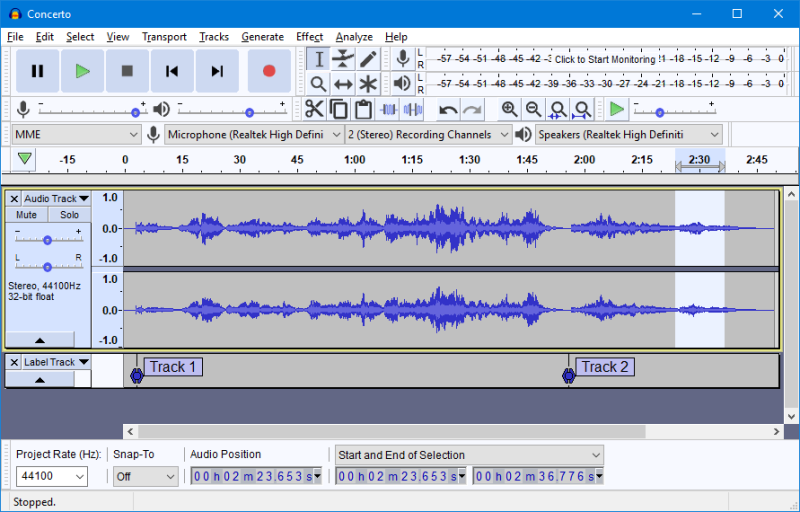
Audacity gets the top spot because it solves the core job without asking for money, licenses, or streaming credentials. On Windows, its official computer playback recording guide makes WASAPI loopback the cleanest free path on this list.
That does not mean Audacity is effortless. It means it is honest. You record what your PC is already playing, then you do the cleanup yourself.
Fits best for: Windows users, free-first skeptics, and privacy-conscious readers who want the strongest no-login baseline.
Why you might pick it:
- Free and open-source
- Strong Windows story with WASAPI loopback for bit-perfect capture
- Zero credential sharing with Spotify, Apple Music, or anyone else
- Big community footprint, which makes setup issues easier to research than with obscure tools
Where it struggles:
- No real automation for splitting a long playlist into clean tracks
- No built-in workflow for automatic ID3 tags and cover art like paid tools offer
- On Mac, it is not plug-and-play. You usually need BlackHole plus a Multi-Output Device. Last month I spent two hours in silence hell on macOS Sonoma trying to configure BlackHole 16ch, only to discover the sample rate in MIDI Settings was mismatched. Community threads keep showing the same routing mistakes and crashes. The Audacity forum is full of exactly that pain.
Priority scenario: Try Audacity first if you are on Windows and your main goal is simple: record what you hear, spend nothing, and avoid account risk.
Skip it if: you are on Mac and already know you will hate BlackHole routing, or you want automatic track splitting and tagging from day one.
#2 Cinch Audio Recorder — Best Paid Upgrade for Automation and Mac Users
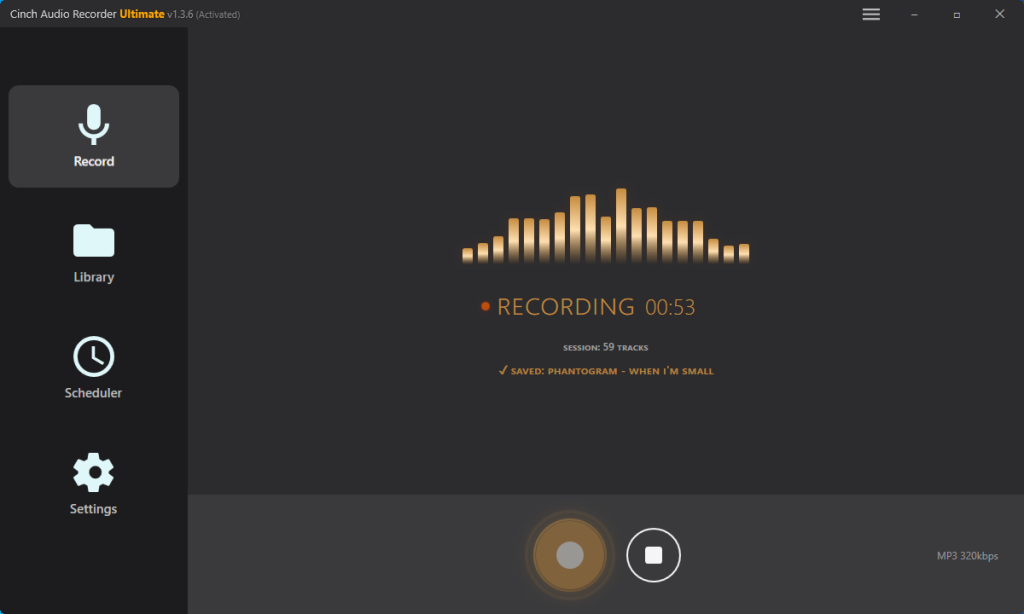
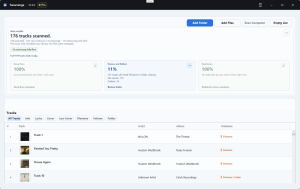
Cinch is the tool you move to when Audacity’s manual-work wall stops being cute. In a 40-song Spotify test playlist containing indie releases and live versions, Cinch successfully captured 38 tracks with perfect ID3 metadata matching and 500×500 high-res cover art—without triggering a single Spotify login prompt. It has a native Mac app for macOS 13.5+. You do not need the BlackHole detour that makes Audacity on Mac feel more like audio plumbing than music capture.
This is why it ranks #2 instead of #1. It is easier, cleaner, and better for automation, but it is still a paid upgrade. Audacity earns the trust-first slot; Cinch earns the “I need this to stop being manual” slot.
Fits best for: Mac users, bulk recorders, and anyone who wants the recorder to handle the boring library work too.
Why you might pick it:
- Native Mac version that avoids BlackHole virtual audio driver routing
- Auto-splitting for recorded songs instead of one giant file
- Acoustic fingerprinting for song recognition
- Automatic ID3 tags
- 500×500 cover art download and embedding
- 9-song free trial before you need the lifetime license for unlimited recording
It also behaves more like a music workflow than a raw recorder. You record, let it identify tracks, and end up with something much closer to a usable library instead of a folder full of unnamed audio chunks.
Where it struggles:
- It is not free after the 9-song trial
- It still records in real time; this is not instant magic downloading
- Obscure live tracks, mashups, or niche releases can still confuse audio fingerprinting and metadata matching
Priority scenario: Put Cinch first if you are on Mac, or if you already know manual splitting and tagging will make you quit after one playlist.
Skip it if: you only need occasional recording on Windows and Audacity already covers your needs.
#3 OBS Studio — Best for Per-App Audio Capture, Not for Library Cleanup
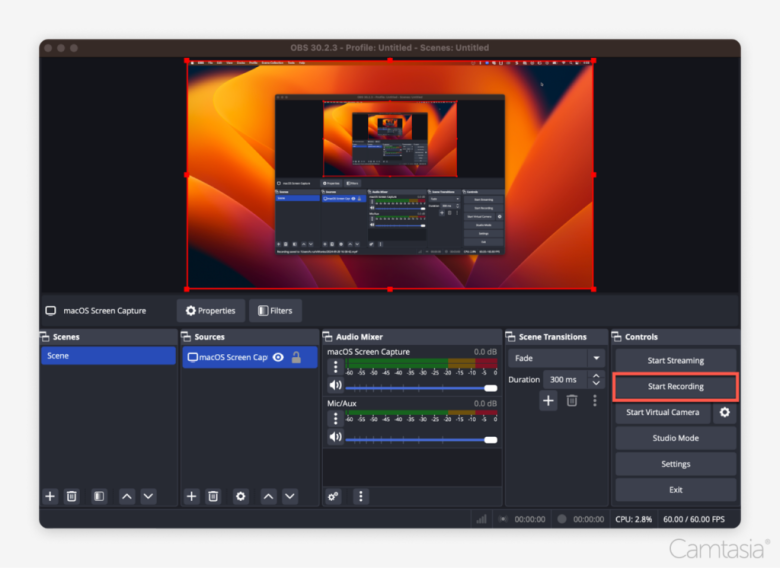
OBS is here because it solves a real problem that Audacity does not solve as neatly: isolating one app’s audio instead of grabbing every notification your computer makes. OBS has an official Application Audio Capture guide, and that alone makes it a strong pick for advanced users who want browser-only capture.
But OBS is still a broadcasting tool first. It gives you control, not convenience.
Fits best for: advanced users, podcasters, and anyone who needs per-app capture instead of whole-system recording.
Why you might pick it: free, open-source, and better than Audacity when you need to isolate one browser or player.
Where it struggles: no automatic track splitting, no metadata workflow, and more setup overhead than most people need for saving music.
Priority scenario: choose OBS when your real problem is audio routing, not music-library automation.
Skip it if: you want clean song files with minimal post-work. This is a capture tool, not a music organizer.
#4 Audials One 2026 — Best for Feature Hunters Who Accept Upgrade Fatigue

Audials One belongs on the shortlist if you want a bigger media suite, not just a simple music recorder. It is the power-user option here: broader, heavier, and more ambitious than Cinch.
That ambition comes with the usual suite tax. Community reviews in 2026 keep repeating the same complaint: even if you bought in before, staying current often means paying again for newer versions. That makes Audials easier to justify for heavy users than for normal people who just want songs saved cleanly.
Fits best for: people who want a feature-rich paid suite and do not mind learning a bigger interface.
Why you might pick it: more all-in-one coverage than Cinch if your needs go beyond basic music capture.
Where it struggles: annual upgrade pressure, more software than many readers actually need, and less of a clean recommendation if your goal is only streaming music recording.
Bottom line: consider Audials if you have budget, want a broad suite, and know you will use the extra scope. Skip it if you want the smallest path from playback to tagged songs—the upgrade model alone disqualifies it for casual users.
#5 Apowersoft Streaming Audio Recorder — A Traditional Windows Recorder That Still Makes Sense for Some People
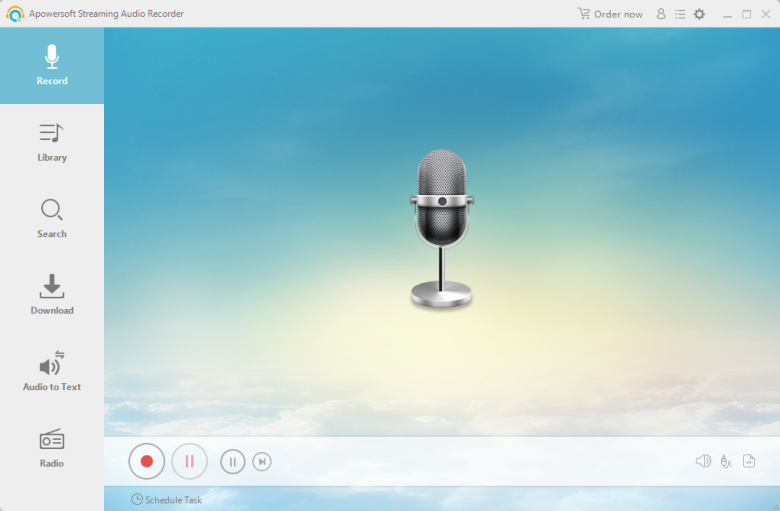
Apowersoft Streaming Audio Recorder has an old-school but clear pitch: record streaming audio, add tags, convert formats, and keep moving. That still has value if you want a more traditional Windows desktop recorder and do not care about open-source purity.
It ranks below Cinch because the workflow is less compelling for Mac users and less trust-heavy than Audacity. It also ranks below OBS because it is less distinctive technically.
Fits best for: Windows users who want a familiar recorder-plus-converter style app.
Why you might pick it: built-in tagging, format conversion, and a straightforward desktop workflow.
Where it struggles: weaker cross-platform story, less convincing differentiation than the top two, and not the same anti-affiliate trust signal as Audacity.
Bottom line: pick it if you want a Windows-focused recorder with tagging and conversion baked in. But if you are choosing between a strong free option and a strong paid option, Audacity and Cinch make that decision cleaner—this tool lives in the middle ground.
#6 SoundTap Streaming Audio Recorder — Fine for Generic Capture, Weak for Modern Streaming-Music Workflows

SoundTap Streaming Audio Recorder is the plain “record whatever the computer plays” option. That can be useful if your audio needs are broad: radio, webinars, VoIP, browser playback, or random desktop sound.
The problem is that music archiving is not where it looks strongest. NCH’s own product page says it will not record streams marked as DRM copy-protected, which is a serious limitation in a category built around modern streaming services.
Fits best for: people who want generic desktop audio capture more than a music-collection workflow.
Why you might pick it: simple one-click capture on PC or Mac without learning a full OBS-style setup.
Where it struggles: thin tagging workflow, weak automation, and an official DRM limitation that matters a lot here.
Bottom line: use it when you need a basic capture utility, not when you are building a clean offline music library. If Spotify or Apple Music recording is your main goal, the DRM limitation alone makes it unsuitable.
#7 Free Sound Recorder — Barebones Fallback, Not a Real First Choice
Free Sound Recorder only makes the list because some readers still want the simplest possible answer: capture whatever passes through the sound card and stop there. Its own pitch is basically that simple.
That simplicity is also why it stays at the bottom. It does not meaningfully change the shortlist for most people in 2026. If you care about better support, better automation, better metadata, or better trust signals, the tools above it are easier to justify.
Fits best for: people who want a lightweight fallback and do not care about polished music-library features.
Why you might pick it: basic capture without the size and complexity of OBS.
Where it struggles: minimal automation, weak differentiation, and not much reason to choose it over Audacity unless you want something more barebones.
Bottom line: keep it in mind as a fallback, not as your main plan. If you want this process to feel modern, organized, or reliable at scale, Audacity is free and does more.
API Converters vs System-Level Recorders: The Warning Most Lists Bury
If a tool asks for your Spotify, Apple Music, or similar streaming login, stop right there. That tool is not just a recorder. It is a login-based converter or scraper, and that is a different risk profile.
Here is the blunt version:
- A system-level recorder captures the audio your own computer is already playing.
- A login-based converter tries to work around service controls, account auth, app hooks, or API access.
That is why the word “converter” is usually misleading in this niche. The hard technical wall is the DRM layer. Services protect streams with Widevine, FairPlay, HDCP, and related systems. The stable workaround is to record playback after decryption on your own device. It is boring, but boring is good when you want something that keeps working.
The risk side is just as important. Spotify’s 2026 security update shows the platform tightening access, not relaxing it. Login-based tools sit much closer to terms-of-service violations than plain recorders do. On top of that, there are documented Reddit threads reporting bans after people used login-based music tools, including posts like this r/StreamFab report. That is anecdotal, not a formal ban-rate study. But it is enough reason not to recommend those tools casually.
So yes, Sidify, DRmare, TuneFab, and similar tools can look faster on paper. I still keep them out of the ranked 7 because they ask readers to trade account safety for convenience, and most competitor listicles hide that trade instead of spelling it out.
FAQ
Can I get banned for using a streaming music recorder?
Using a system-level recorder like Audacity, Cinch, or OBS is the lower-risk path because those tools do not require your streaming credentials. Login-based converters are the risky category because they ask you to share account access and can violate service terms or outright break ToS. That is where documented ban reports show up.
How to record Spotify on Mac without BlackHole or Soundflower?
This is exactly why Cinch Audio Recorder ranks #2. It has a native Mac app for macOS 13.5+ that bypasses the virtual audio driver nightmare. No BlackHole, no Soundflower, no Multi-Output Device configuration. You install it, pick your audio source, and record. For Mac users who have already suffered through silent recordings and routing mistakes, this alone justifies the upgrade.
Is Audials One worth the upgrade price in 2026?
Only if you genuinely need a full media suite. Audials One 2026 is heavier and more ambitious than Cinch, but community reviews keep repeating the same complaint: staying current often means paying again for newer versions. If you only want streaming music recording, the upgrade model alone disqualifies it for casual users. Pick Audials if you have budget, want broad features, and know you will use the extra scope. Skip it if you want the smallest path from playback to tagged songs.
Why is Audacity #1 if Cinch is easier?
Because the ranking is not built around affiliate payouts. Audacity is free, open-source, and strong on Windows with WASAPI loopback. Cinch is easier, especially on Mac, but it is still a paid upgrade. For most readers, the honest order is free baseline first, paid convenience second.
Can I get true lossless audio from Spotify or Apple Music with these tools?
Do not expect secret lossless extraction from a recorder. You are capturing playback, not pulling a hidden master file out of the service. Quality depends on the source stream, your playback settings, and the recorder settings. Some workflows support recording up to 24-bit/48kHz if configured correctly, but that is still not the same thing as bypassing DRM and extracting an untouched source file.
Why are Sidify, DRmare, and TuneFab missing from the ranking?
Because they are not the same category as system-level recorders. They are login-based tools that ask for streaming credentials, operate closer to platform restrictions, and carry more breakage and account-risk baggage. This list is intentionally biased toward lower-risk tools that do not need your account login.
Which Tool Fits You
If you want the shortest honest shortlist, use this:
- Start with Audacity if you are on Windows, want to pay nothing, and can live with manual splitting and cleanup.
- Start with Cinch Audio Recorder if you are on Mac, if BlackHole already annoyed you, or if automatic track splitting and ID3 tags will save you hours.
- Pick OBS Studio if your real need is per-app audio capture, like recording just your browser without system sounds.
- Pick Audials One 2026 only if you genuinely want a larger media suite and accept that future upgrades may keep costing you.
- Treat Apowersoft, SoundTap, and Free Sound Recorder as fallback options, not default recommendations. They do not change the core decision.
- Skip login-based converters first if you care about your streaming account, stability, or basic common sense.
For most readers, the real decision is simple: Audacity first, Cinch second. Everything else is there for edge cases.