Quick Summary
Free Spotify rippers promise 320kbps downloads—but from source YouTube audio at 128kbps. This guide exposes the YouTube Match Scam and account suspension risk.
Free Spotify rippers aren’t downloading from Spotify. They’re downloading from YouTube.
What you’re actually getting is a YouTube audio stream—often from a music video with dialogue, sound effects, or a completely different mix than the album version you wanted. The tool just scrapes Spotify’s metadata to make it look legitimate.
This guide covers three problems: the YouTube Match Scam (fake audio source), the fake bitrate problem (128kbps upscaled to “320kbps”), and the suspension risk from high-speed recording tools.
If you just want a list of software, you can find hundreds of generic top-10 lists on Google. But if you want to know which ones will give you CD quality and which ones will get your Spotify account permanently banned in 2026, keep reading.
How Most Spotify Rippers Work (The YouTube Scam)
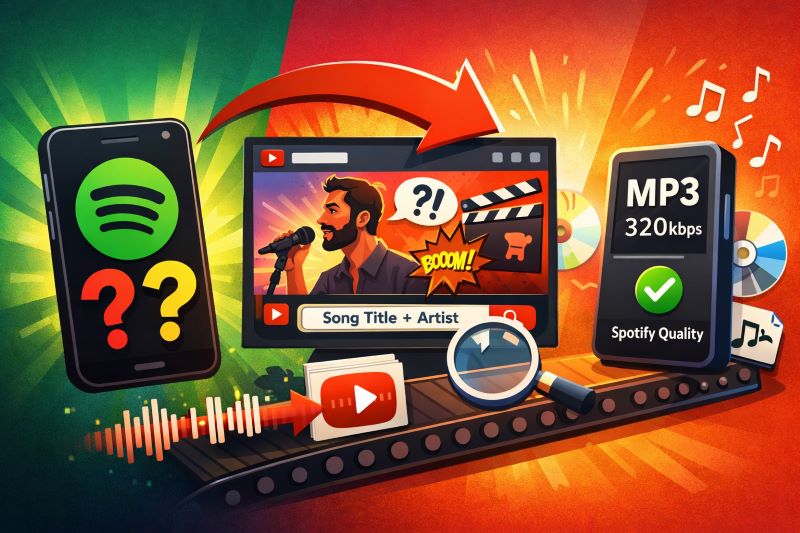
The Industry’s Dirty Secret: Free tools don’t download from Spotify—they search YouTube for the song title, download the audio from the first matching video (often a music video with dialogue or sound effects), and re-label it as “Spotify quality.”
The Audio Source You Didn’t Know About
When a free downloader claims to “convert Spotify to MP3,” here’s what it’s actually doing:
- Search YouTube for the song title + artist name
- Download the audio stream from the first matching video
- Re-encode to MP3 and label it as “320kbps”
- Add basic metadata scraped from Spotify’s public catalog (title, artist, album)
You never see the YouTube step. The tool’s interface shows Spotify album art and track names, creating the illusion of a direct Spotify download. But the audio came from a music video—potentially with:
- Dialogue and acting scenes from the MV storyline
- Sound effects (car engines, applause, environmental noise)
- Extended intros/outros not present in the album version
- Live performance recordings instead of studio tracks
- Remixes or alternate versions
According to KigoSoft’s comparison of free Spotify downloaders, most free online tools explicitly state that their audio source is YouTube. Output is capped at 128kbps MP3. The “Spotify branding” is just marketing veneer.
Why “320kbps” from Free Tools Is Fake
Here’s the technical reality that no downloader interface will tell you:
YouTube’s audio streams are capped at:
- Regular videos: 128kbps AAC or 160kbps Opus (maximum)
- YouTube Music Premium: 256kbps AAC (maximum)
These are hard codec limits. No YouTube video delivers 320kbps audio because the platform doesn’t support it.
Spotify’s actual quality:
- Premium desktop/mobile: Up to 320kbps OGG Vorbis (a compressed audio format similar to MP3)
- Premium web player: 256kbps AAC (Apple’s audio format)
- Premium Lossless (2025+): FLAC up to 24-bit/44.1kHz
When a free tool exports a “320kbps MP3,” it’s not pulling that quality from anywhere. It’s taking a 128kbps source and upsampling it—essentially stretching a small image to a larger canvas. The file size increases, but no audio data is recovered. The frequency content that was already cut off at 128kbps encoding stays cut off.
Reddit’s audiophile community documents this clearly: you can verify fake upsampling by running the MP3 through a spectrum analyzer like Spek. Real 320kbps files show frequency content up to ~20kHz. Upsampled YouTube rips show a hard cutoff around 15-16kHz—the signature of a 128kbps source pretending to be higher quality.
The file size tells the truth:
- Real 320kbps MP3: ~8-12MB for a 3-4 minute song
- Upsampled YouTube rip: often 4-6MB, despite the “320kbps” label
You’re paying for a bigger file, not better audio.
When Quality Matters
If you’re casually listening on cheap earbuds or phone speakers, a 128kbps YouTube rip might sound fine. But if you archive music, use decent headphones, or care about getting the correct album version (not a MV remix), free downloaders are giving you something fundamentally different from what you searched for—without telling you.
The Hidden Risk: Can Spotify Ban Your Account?
🔴 Yes. Multiple users have reported account suspensions since June 2021.
The trigger isn’t “downloading” in general—it’s high-speed recording features that abuse Spotify’s API.
How Spotify Detects API Abuse
Spotify’s Terms of Service prohibit “unauthorized downloads,” but the detection mechanism isn’t magic. It’s pattern-based:
- Normal listening: A user plays 10 hours of music over, say, 2 weeks of normal activity
- High-speed recording: A tool claims to “convert 10 hours in 30 minutes”—which means it’s sending abnormal API requests to Spotify’s servers
When a 10-hour playlist completes in 30 minutes of reported playback time, Spotify sees impossible listening patterns. That’s the red flag.
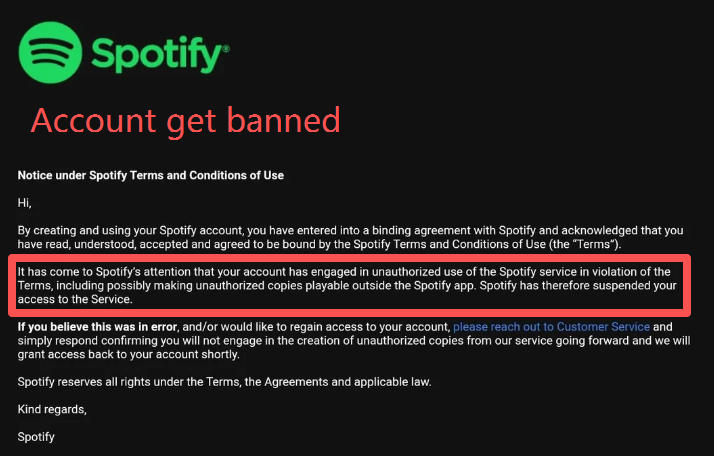
Macsome’s official notice documents this: users who enabled 10x speed conversion received suspension emails stating “unauthorized use of the Spotify Service, including possibly engaging in unauthorized content downloads.” Express UK reported similar cases from UK users using Audials with high-speed features.
Some users reported suspensions even months after stopping high-speed recording. This suggests Spotify may retroactively analyze playback patterns.
The Triggers That Get You Banned
- Tools that log into your Spotify account (requiring credentials)
- 10x speed / batch conversion (playback data that doesn’t match realistic human behavior)
- API-based downloaders (directly querying Spotify’s servers, not just recording audio)
What Has Lower Reported Risk
- System-level audio capture (doesn’t interact with Spotify API, doesn’t require login)
- Manual recording (1x speed, no API calls)
- Tools that explicitly state “no login required”
The difference: system audio recording captures what your computer already plays. It doesn’t send requests to Spotify’s servers. It doesn’t create abnormal playback logs. From Spotify’s perspective, you’re just listening normally—because you actually are.
API-based high-speed tools have documented suspension cases. System-level recording has none (as of 2026). That’s the risk gap.
🔴 What To Avoid
- Any tool that asks for your Spotify login credentials
- Features advertised as “10x speed” or “fast conversion”
- Downloaders that claim to “decrypt” or “remove DRM” from Spotify streams
These directly interact with Spotify’s protected APIs and leave detectable traces.
The 1:1 Solution: System-Level Audio Capture
When free downloaders give you YouTube audio and API-based tools risk account suspension, there’s a third option: system-level audio recording captures what your computer plays—no Spotify login, no API requests, no abnormal playback patterns. It’s slower (1x speed), but has no documented suspension cases.
The Analog Hole: How It Works
This method doesn’t download anything from Spotify’s servers. It records what your computer’s sound card outputs:
- You play Spotify normally (on the desktop app or web player)
- The tool captures the audio stream directly from your system audio output
- It encodes to your chosen format (MP3, FLAC, etc.) in real-time
- Automatic track detection identifies song boundaries using audio fingerprinting
- Metadata tagging adds ID3 tags, album art, and lyrics where available
No Spotify login. No API requests. No abnormal playback patterns.
Cinch Audio Recorder: The Key Difference
Cinch Audio Recorder operates on this principle. Unlike many converters that only work on Windows or require complex virtual audio drivers on macOS, Cinch runs natively on both Windows and Mac (including Apple Silicon M1/M2/M3 chips), capturing pristine system audio without any complicated setup.
According to its product documentation:
- Cross-platform: Native support for both Windows and macOS with identical 1:1 lossless recording quality
- Recording mechanism: System-level audio capture via sound card
- Login requirement: None—works with Spotify Free or Premium without account access
- Output formats: MP3 (up to 320kbps), AAC (256kbps), FLAC, WAV
- Automatic features: Track splitting, ID3 tagging, cover art, lyric embedding
The 1:1 recording quality depends on your system’s audio configuration:
- If your playback device is set to 24-bit/48kHz, Cinch captures at that quality
- If you’re playing Spotify Premium at 320kbps OGG Vorbis, the recorded output can approach that fidelity
This isn’t “better than Spotify”—it’s matching what you actually hear. The quality depends on getting your system audio settings right.
What You Trade Off
- Speed: 1x real-time (recording a 4-minute song takes 4 minutes)
- No batch automation: You play the playlist, the tool records sequentially
- Cold track identification: Obscure or live versions may not auto-tag correctly
If you’re archiving a decade’s worth of playlists, this pace is painful. But if you have a 10-year Spotify account you don’t want to lose, the tradeoff is worth considering.
How to Record Spotify to MP3 Safely (Step-by-Step)
The 1:1 Rule: Set your system audio to 24-bit/48kHz first, then use Cinch to record at 1x speed. The recording quality depends on your playback settings, not the recorder’s output format.
If you decide system-level recording fits your needs, here’s how to set it up correctly.
Step 1: Configure Your Audio Quality First
The recording quality is limited by your playback quality. Before recording:
On Windows:
- Open Sound Settings → select your playback device
- Click Properties → Advanced tab
- Set Default Format to 24-bit, 48000 Hz (or highest available) — this determines the quality ceiling for your recordings
- In Enhancements tab, check “Disable all enhancements”
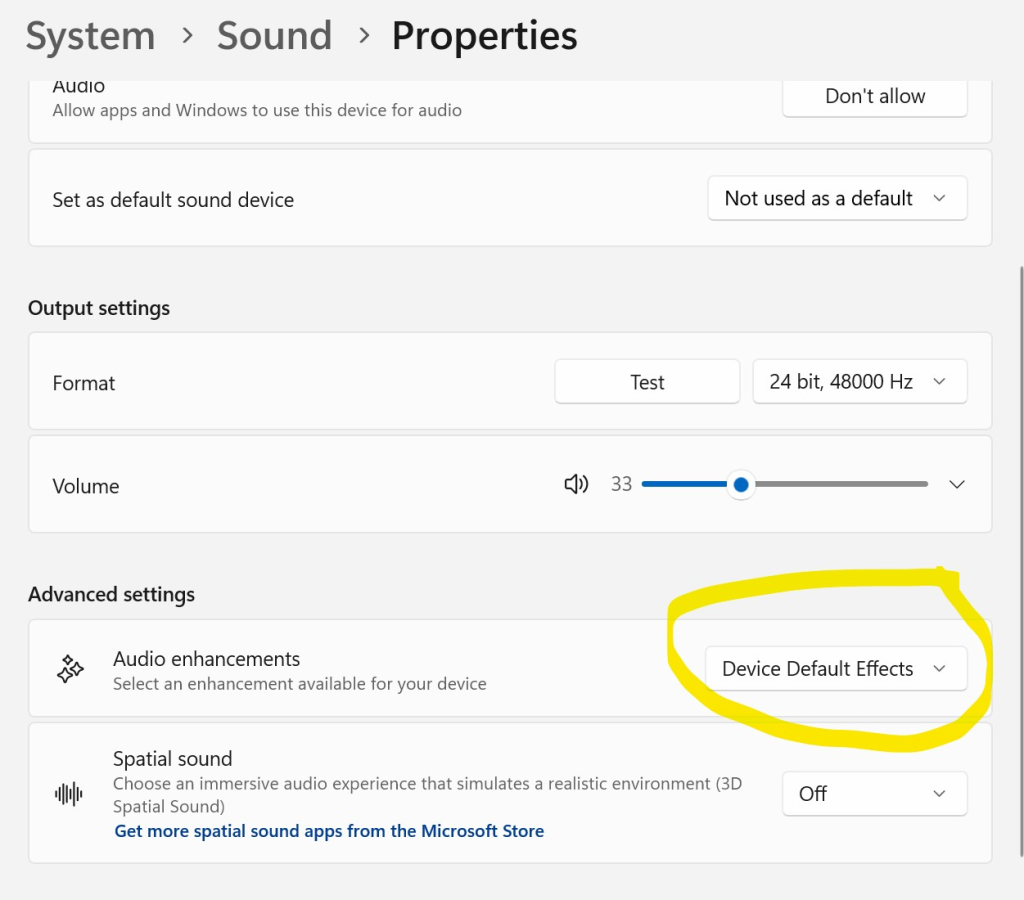
On Mac:
- Open Audio MIDI Setup (Applications → Utilities → Audio MIDI Setup)
- Select your output device → click Configure
- Set Format to 48000 Hz and 2ch-24bit if available
- Mac’s Core Audio handles the rest—no virtual drivers needed for Cinch
On Spotify:
- Use the desktop app (not web player) for highest quality
- Go to Settings → Audio Quality
- Set to “Very High” (320kbps OGG Vorbis for Premium)
These settings determine what Cinch can capture. If your system outputs 16-bit/44.1kHz, even a FLAC recording won’t exceed that ceiling.
Step 2: Set Cinch Output Format
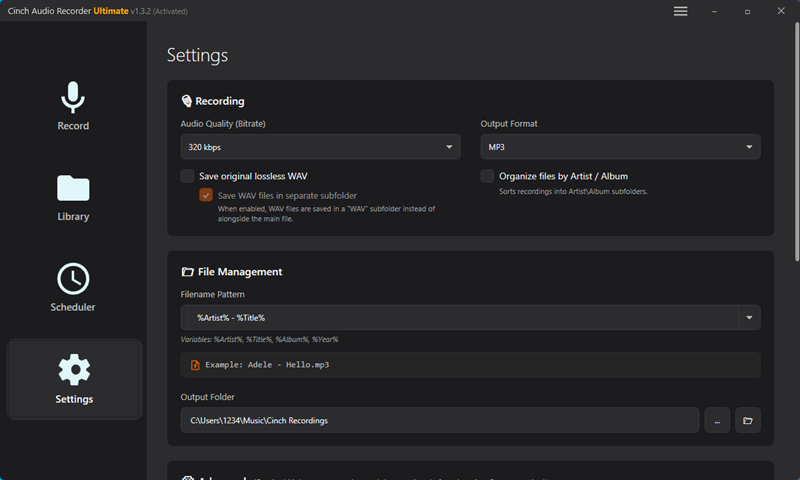
In Cinch’s settings:
- For maximum quality: Choose FLAC or WAV (lossless, larger files)
- For portability: Choose MP3 320kbps (good quality, smaller files)
- For compatibility: Choose AAC 256kbps
The output format affects file size, but not the underlying recording quality—that’s already capped by your playback settings.
Step 3: Record Your Playlist
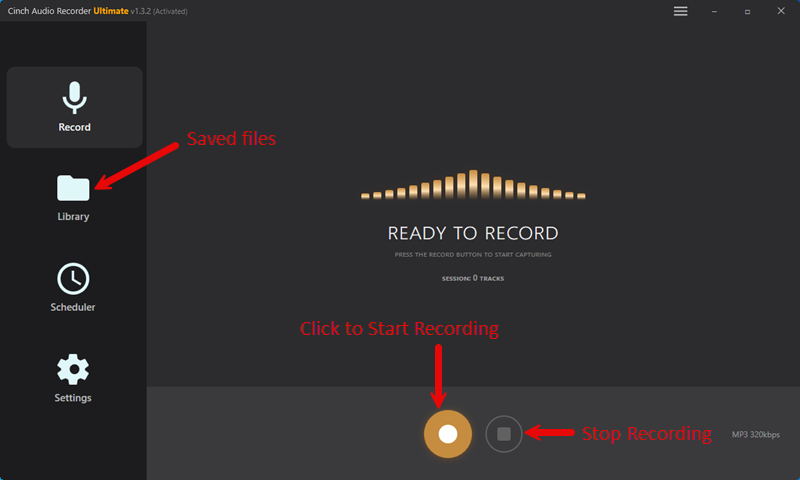
- Open Cinch Audio Recorder
- Click “Start Recording”
- Play your Spotify playlist normally (let each track complete)
- Cinch will automatically detect track boundaries and split recordings
- Check the recordings for correct metadata (cold tracks may need manual editing)
Step 4: Verify Your Results
Check a few recordings:
- File size: A 320kbps MP3 of a 4-minute song should be ~8-12MB
- Metadata: Title, artist, album should match Spotify’s info
- Audio content: No dialogue, engine sounds, or extended intros (unless you deliberately played a MV version)
If tracks have wrong metadata, Cinch includes a “Re-Identify” feature to retry matching the song against its database, or you can manually edit tags.
What To Do Next
If you’ve hit MV dialogue in your downloads or worry about suspension reports, system-level recording is the honest path. It’s slower than “10X conversion” claims, but you get the actual album versions—and your account behavior stays normal.
For quick decisions:
- Casual use, no archival needs: Free YouTube-match downloaders are enough if you don’t mind 128kbps and potential MV content
- Long-term account protection: Avoid any tool requiring login or offering “10x speed”
- Archival or quality-conscious: System-level recording with correct audio settings
Reality check: Free tools give you YouTube audio with Spotify branding. API-based tools leave detectable traces. System-level recording is slower but gives you what you actually played. Pick based on what you’re willing to trade—speed, accuracy, or account safety.
Frequently Asked Questions
Why do my downloaded Spotify MP3s sound like YouTube videos?
Because most free online Spotify rippers don’t actually download from Spotify. They scrape the song title from your playlist and download the audio stream from the corresponding YouTube music video—capping the quality at 128kbps. That’s why you hear dialogue, engine sounds, or extended intros that don’t match the album version.
Can you get banned for converting Spotify to MP3?
Yes. Spotify actively suspends accounts that use high-speed (5X/10X) API-based converters because they create impossible playback logs—like finishing a 10-hour playlist in 30 minutes. Using 1x system-level audio recording is currently the only method with no documented ban reports, since it doesn’t send abnormal API requests.
Is there a real 320kbps Spotify to MP3 converter?
To get true 320kbps quality, you must use a Premium Spotify account and capture the audio directly from your sound card using a system-level recorder set to 24-bit/48kHz output. Free tools claiming “320kbps export” are just upsampling 128kbps YouTube sources—the file size increases, but no audio quality is recovered.
Can I record Spotify to MP3 on a Mac without malware?
Yes. While macOS has strict internal audio routing rules that break many free recorders, system-level recording tools like Cinch Audio Recorder are designed to safely capture audio without installing sketchy virtual drivers. Cinch runs natively on macOS (including Apple Silicon M1/M2/M3) and captures Spotify directly to MP3 or FLAC with no login required.

I used to use Viwizard… it was great, until Spotify detected i was using it, then banned me.
In conclusion; avoid Viwizard.