+Quick Summary
Learn how to record Amazon Prime/Unlimited Music as MP3 with easy methods. Save your favorite songs offline and enjoy them anytime.
If your Amazon Music subscription is ending and you want files that still play outside the app, the fastest no-budget route is Audacity with Windows WASAPI loopback. On Mac, use BlackHole + Audacity. This records normal playback from the Amazon Music desktop app. It does not unlock Amazon’s official offline downloads into reusable MP3s. For a few albums, the free route works. For weekly archiving or Discovery Mix capture, expect manual cleanup work.
Let’s be honest: you’re here because your subscription is ending, your car’s USB drive won’t play protected files, or you’re sick of “downloaders” that break every time Amazon updates its code. Here is the unfiltered truth about how to actually save your music.
Stop Thinking “Download”. The Real Job Is Recording Normal Playback
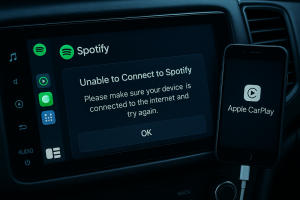
Amazon does not hand you normal music files when you tap Download inside the app. Per Amazon’s DRM overview, audio segments after the first 30 seconds are encrypted and require a license to decrypt. That is why official offline playback stays locked to Amazon’s app and periodic verification instead of becoming drag-and-drop MP3 files.
So the practical workaround is not “find the right downloader.” It is: let the official app do the playback and decryption, then capture the audio your computer is already allowed to play.
If you only want a rescue copy before your subscription ends, stop hunting for a magic unlocker. Recording the official app is the stable path; everything else is usually trying to fight Amazon’s playback stack head-on.
That difference matters. A recorder is rebuilding local files from normal playback. It is a substitute path, not the same thing as Amazon’s official offline feature.
Free on Windows: Audacity + WASAPI Loopback
What you need before starting: A Windows PC (Windows 10 or 11), the Amazon Music desktop app installed and working, and about 30 minutes for setup plus recording time. You do NOT need to create any accounts or enter passwords.
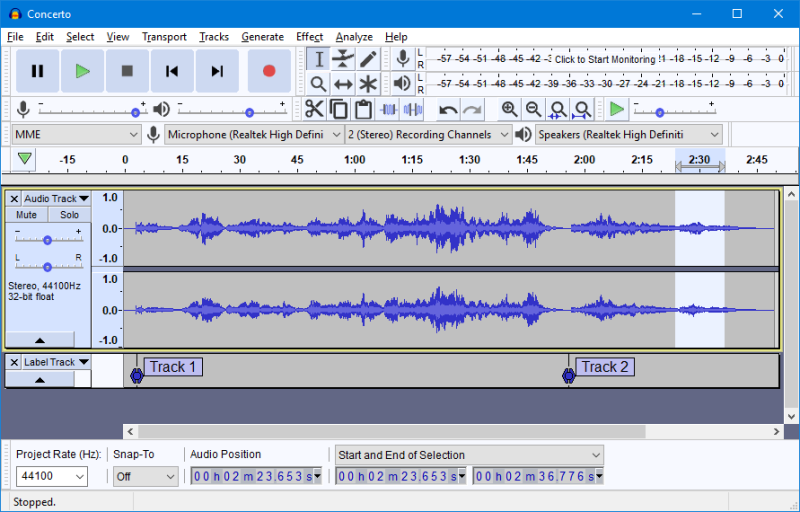
For a Windows user with no budget, this is the first method I would try. It is built around Audacity’s official desktop recording workflow, and it does not ask for your Amazon password inside a third-party converter. Because WASAPI loopback is already built into Windows, you usually do not need old Stereo Mix hacks or extra virtual-cable setup just to make it work.
Important reality check: This method captures audio fine, but you will need to manually split recordings into individual songs and add song titles/artist names yourself afterward. For one album, expect 15-30 minutes of cleanup work. For many albums, this becomes tedious.
What WASAPI loopback actually does
Forget complex virtual cables. WASAPI loopback simply intercepts the decrypted audio directly from your sound card—the same digital stream Windows sends to your speakers or headphones.
That is why this method is more stable than a typical converter. Amazon’s desktop app is doing normal playback. Audacity is just recording what Windows is already outputting. From Amazon’s side, this looks much more like ordinary listening than a tool trying to parse the web player and pull from that path.
How to set it up
- Download and install Audacity from audacityteam.org (choose the Windows installer). Keep the default settings during installation.
- Open the Amazon Music desktop app and make sure you can play music normally. If sound quality matters, use the desktop app, not the web player.
- In Audacity, click the Audio Setup button (or go to Edit → Preferences → Audio Settings).
- Set Host to Windows WASAPI.
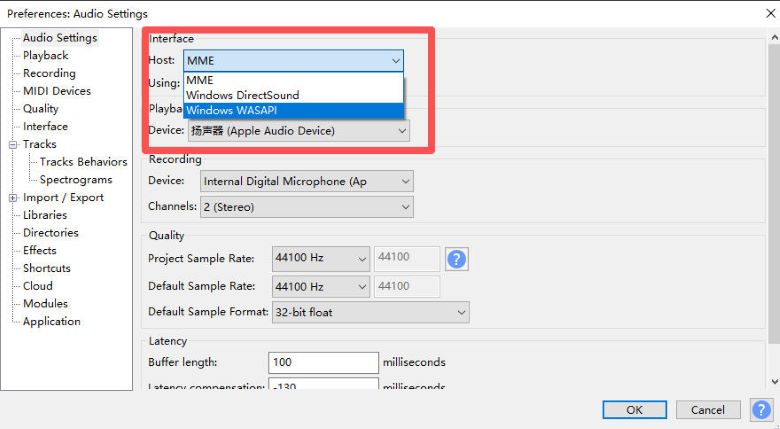
- For Recording Device, choose your current playback device (like “Speakers” or “Headphones”) but select the version marked (loopback). If you do not see a loopback option, try selecting “Host: Windows WASAPI” first—this enables loopback mode.
- Start playing a song in Amazon Music before you hit Record in Audacity. WASAPI only captures active audio streams.
- Click the red Record button in Audacity and let the song, album, or playlist play through.
- Keep Windows notifications, browser videos, games, and other system sounds quiet, because loopback will capture those too.
- Click the yellow Stop button when done. Export via File → Export Audio. Choose WAV or FLAC if you want a cleaner master to edit later, or MP3 if storage matters more.
What success looks like
If it is working, Audacity will show a moving blue stereo waveform while Amazon Music plays. You should see peaks and valleys in the waveform that match the music. After export, you will have a normal audio file on disk that can play in VLC, your car stereo, or any regular music app.
What you will NOT get automatically: Individual song files. Audacity records one continuous audio file. If you recorded a full album, you now have one long file containing all tracks. You will need to either:
- Manually find each song boundary and export tracks one by one, or
- Use the free tool MusicBrainz Picard afterward to help split and tag the file (adds another learning curve)
The cleanup work is real: Your exported file will have no song titles, artist names, or album art. For a 12-song album, expect to spend 15-30 minutes adding this information manually or learning Picard.
Two mistakes that waste the most time
- Flat line recording (no waveform): This happens if you hit Record before starting playback in Amazon Music, or if you selected the wrong input device. WASAPI can only record when audio is actively playing. Fix: Delete the silent track, start the song playing first, then hit Record.
- Still seeing a flat line: If the above does not work, check that your Amazon Music app is actually outputting to the device you selected for loopback. Go to Windows Settings → System → Sound → App volume and device preferences, and verify Amazon Music is using the same output device you selected in Audacity.
- Accidentally recording junk audio: Notification pings, browser autoplay, Discord sounds, even your own test videos can end up inside the recording if they hit the same output device. Prevention: Close browsers, mute Discord, and turn on Windows Focus Assist before recording.
- Hearing echo while recording: If you hear the music playing twice, check Audacity’s Transport menu and make sure Software Playthrough is turned OFF.
Free on Mac: BlackHole + Audacity (Windows users: skip this section)
The Mac route works, but requires extra setup because macOS does not include built-in desktop-audio recording like Windows WASAPI. Mac users need BlackHole, a virtual loopback driver. The process involves installing BlackHole, configuring Audio MIDI Setup, and creating Multi-Output Devices. If you are on Mac and find these steps unfamiliar, the free route is still possible but adds significant setup friction compared to Windows.
Why Mobile Screen Recording Does Not Work (DRM Wall)
Skip the app store screen recorders. Amazon Music uses heavy DRM protection that triggers HDCP on mobile devices. If you try iOS Screen Recording or Android’s built-in capture while playing Amazon Music, the system blocks the audio stream—your video records silence or a black screen. This is hardware-level protection, not a software bug.
The only reliable path: Computer-level loopback recording (WASAPI on Windows, BlackHole on Mac). It captures the decrypted audio after your sound card processes it, bypassing the mobile DRM wall entirely.
The Free Route Is Not Really Free Once You Count Cleanup Time
Recording a song for free is easy. Turning a long recording into a clean library is the expensive part—the cost is your time.
What “free” actually means in practice:
- No automatic track splitting: You get one long file per recording session. Separating it into individual songs requires manual work or learning additional tools.
- No metadata: Your exported files will have blank title, artist, and album fields. You must fill these in manually or use a tagger like MusicBrainz Picard (which has its own learning curve).
- No album art: Cover art does not come with the recording. You will need to add it separately.
- Time adds up fast: Users report spending 30+ minutes per album on cleanup work—finding track boundaries, exporting individually, entering metadata, hunting down cover art.
When the free route makes sense:
- You only need to rescue a few albums before a subscription ends
- You are comfortable with manual editing or willing to learn Picard
- Your time is less valuable than $35 (the cost of automation tools)
When it becomes frustrating:
- You want to archive many albums or playlists
- You are recording Discovery Mix or algorithm radio (continuous streams)
- You need the process to “just work” without babysitting
For a one-off rescue job before a subscription lapses, the tradeoff is acceptable. For weekly use, it becomes maintenance work that eats your time.
When Cinch Audio Recorder Starts Making Sense
I would not lead with a paid tool if you only need a few songs. But once the manual work starts getting silly, Cinch Audio Recorder is the kind of tool that earns its place because it automates the ugly parts of the workflow rather than pretending to be a magic downloader.
Its core model is still system-level recording, which is exactly why it is more trustworthy than most converters. It records what your computer is already playing instead of asking you to log into Amazon inside a built-in browser shell.
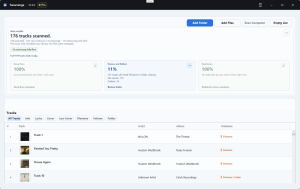
What it saves you from is the boring labor: It handles the automatic start/stop while music is playing, splits tracks on the fly, and uses audio fingerprinting to pull down the correct metadata and album art. You literally just press play and walk away.
That automation matters most if you archive more than a handful of songs, record long sessions regularly, or deal with stations or Discovery Mix instead of neat static playlists.
Mac users, listen up: Cinch has a native Mac version that completely bypasses the BlackHole virtual driver nightmare. You do not need to touch Audio MIDI Setup—just install and record.
Per the product guide for this project, you can test Cinch by recording 9 songs for free before deciding whether the automation is worth it. That is the right way to evaluate it. Do not buy it because a review says “easy.” Try one short workflow and see whether it actually removes your cleanup pain.
One boundary to keep in mind: Cinch’s value is workflow automation, not magic quality bypass. According to its guide, it records up to 24-bit/48kHz.
Why I Do Not Put Amazon Music Converters First
Most Amazon Music “converters” are not talking to some privileged desktop-only source. Many of them are a built-in login page plus an embedded Amazon web player path. You sign in inside the converter, the tool tries to parse or piggyback on that playback flow, and then it promises MP3/FLAC output as if it found a secret back door.
That creates two separate problems.
1. The workflow is fragile by design
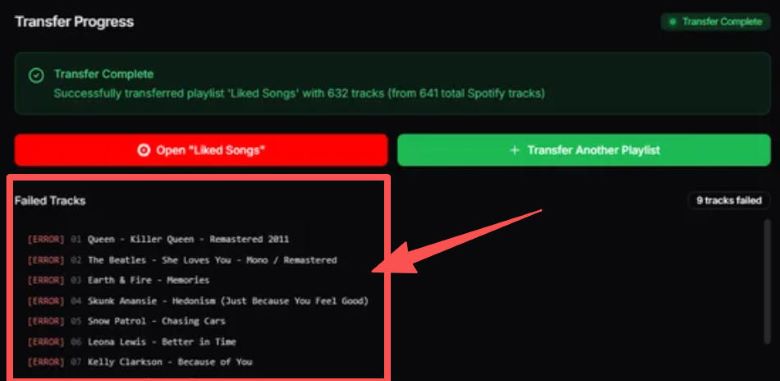
When a converter depends on Amazon’s web-player structure, any player update can break it. That is why Amazon Music parse failed and Error 1000 complaints pile up in forums whenever Amazon tweaks their web player. If you’re chasing Amazon Music Unlimited high quality offline files, a fragile web scraper is the wrong tool.
If you already hit that kind of wall once, the usual mistake is downloading a second converter that works the same way under a different brand name.
If one web-player-based converter already broke for you, skip the next clone and move to system-level recording. You are usually fighting the same fragile idea in a different skin.
2. You are handing account access to third-party software
Handing your Amazon password to a third-party wrapper app is a massive security blind spot. It triggers suspicious-login checks and puts your Prime account at unnecessary risk. Keep the playback in the official app, where it belongs.
Ultra HD Claims: Believe the Audio Path, Not the Badge
Amazon’s own HD and Ultra HD help page describes the quality tiers and mentions broad device support, including the web player. But for end users trying to make permanent local files, the safer conclusion is simpler than the marketing: if you care about true 24-bit/192kHz output, use the desktop app path and verify your operating-system audio settings. Do not trust a web-player-based converter’s Ultra HD claim at face value.
Why? Because the recording or conversion result is limited by the playback chain it can actually access.
- A converter that runs through an embedded web player is still stuck with the web route it can see.
- A system recorder captures what the Amazon desktop app is already outputting.
- Your OS can still resample that output if your playback device is set to a lower default format.
So even a “good” recorder cannot give you detail that never made it out of the app and into the system audio stream.
How to avoid fooling yourself on quality
- Use the Amazon Music desktop app, not the browser, for any serious quality test.
- Check that the track itself is marked HD or Ultra HD in Amazon Music.
- On Windows, open your playback device settings and set the default format as high as your hardware supports if you want to chase higher-resolution output.
- On Mac, check the sample rate in Audio MIDI Setup.
- Turn off audio enhancements or “sound improvement” effects that can color the result.
If real Ultra HD matters to you, a recorder is only as good as the playback chain feeding it. If a converter’s whole trick is an embedded web player, treat “Ultra HD download” as a claim to verify, not a fact to trust.
Stations, Discovery Mix, and Algorithm Radio Need a Different Workflow
Saving a fixed album is one job. Saving Stations, Discovery Mix, or algorithm radio is another. Those are continuous recommendation streams. Traditional converters are much better at finite playlists with known track lists than at never-ending radio-style playback.
Recording tools fit this scenario better.
Why a recorder fits better here
- it can just let the stream play normally
- it does not need the station to exist as a stable downloadable playlist
- auto-split can break the stream into individual songs
- audio fingerprinting can identify tracks after recording
- automatic tags and album art reduce cleanup work
With free tools, you still have to split and tag manually after recording.
With a tool like Cinch, the value is much clearer here than it is for one-off album rescue. Auto-splitting, fingerprinting, cover art, and scheduled recording are all practical when you want to archive a weekly Discovery Mix without babysitting the whole session.
There is still a limit: silence detection is not perfect. Quiet intros, classical music, live albums, and DJ-style transitions can still split late, early, or not at all. So automation reduces labor; it does not replace judgment.
Terms, ToS, and Common Sense
Amazon’s program requirements make its stance clear: partners are expected to preserve DRM, prevent stream ripping, and avoid local caching unless Amazon allows it in writing. That tells you how Amazon views the issue.
Whether personal-use recording is lawful where you live is a separate question and can vary by country. So the sensible boundary is:
- keep recordings for personal use,
- do not share or upload the files,
- and decide your own risk tolerance instead of pretending there is a universal yes/no answer.
Frequently Asked Questions
Can I record Amazon Music on my iPhone or Android?
Not reliably. Amazon Music uses heavy DRM protection. If you use native screen recorders on iOS or Android, the system blocks the audio stream, resulting in a silent recording. You must use computer-level loopback recording (like WASAPI on Windows) for guaranteed results.
Why does my Amazon Music converter keep saying “Parse Failed”?
Most converters use an embedded web browser to scrape audio. When Amazon updates its web player code, these scrapers instantly break, causing “parse failed” or “Error 1000”. System-level recorders don’t have this issue because they capture the decrypted audio from your sound card, not the web code.
Does recording Amazon Music reduce the audio quality?
If done correctly using WASAPI loopback, no. Loopback captures the exact 1:1 digital stream sent to your speakers. To ensure maximum quality, play the music via the official Amazon Music Desktop App (not the web player) and set your Windows audio settings to match the track’s sample rate.
What To Do First
Start small. Test one song before committing to a full album. This single test tells you whether your audio path, quality settings, and workflow are working without wasting time on a failed multi-song recording.
Quick start checklist for the zero-budget Windows user:
- Download Audacity from audacityteam.org and install it
- Open Amazon Music desktop app and start playing any song
- In Audacity: Set Host to Windows WASAPI, select your speakers/headphones (loopback)
- Hit Record in Audacity — you should see a moving blue waveform
- Let 30 seconds play, then stop
- Export as MP3 and try playing it in Windows Media Player or VLC
- If it works: Congratulations, you can now record. Plan 15-30 minutes of cleanup per album for splitting and tagging.
- If you see a flat line: Go back to the troubleshooting section above—most likely you hit Record before starting playback, or selected the wrong device.
Alternative paths:
- Hit “parse failed” with a converter before: Switch to system-level recording (this guide’s Audacity method). Do not download another converter that works the same way.
- Archiving Discovery Mix or many albums: Try Cinch’s 9-song free trial to judge if automation is worth $35 to you.
- Chasing Ultra HD quality: Use desktop app only, verify Windows audio settings match 24-bit/192kHz, and test first.
- Want reliable Amazon Music Unlimited high quality offline files: Use the Audacity + WASAPI method above. It is the most stable path without converter risks.