Quick Summary
Want Mixcloud music offline? This comprehensive guide covers official methods, third-party tools, and pro tips for reliable downloads.
Downloaded a Mixcloud DJ set for your flight, but it stopped playing mid-track with a red “!” error? This isn’t a glitch—it’s how Mixcloud’s DRM works. The app caches encrypted content that needs server verification. Go offline, and that verification fails.
Quick fixes:
- Premium subscriber? Clear corrupted downloads in iPhone Storage, re-download, and don’t play until you’re actually offline. This reduces—but doesn’t eliminate—the chance of playback cutting out.
- Need files that actually work? Third-party download tools give quick results (quality varies), while recording software like Cinch Audio Recorder produces stable, tagged files you can keep permanently.
Mixcloud’s official offline feature only works within their app, requires a paid subscription, and uses DRM protection that can fail mid-playback. The methods below bypass these restrictions—each with different trade-offs.
Why Your Downloaded Mixcloud Tracks Stop Playing Offline
The problem isn’t your device. Mixcloud’s offline system doesn’t give you a real audio file—it caches encrypted content that requires periodic server verification. When you go offline, the app can’t confirm your subscription is still active or that the content hasn’t been modified.
Users on Reddit’s Mixcloud community report the same pattern: WiFi download shows a solid “downloaded” icon, playback works for 2-10 minutes offline, then abruptly stops with a red “!” and “You’re offline” message. This happens even to valid Premium subscribers.
Most common causes:
- Corrupted cache: The download appears complete but the DRM handshake fails when the server can’t be reached.
- Pre-offline playback: Starting playback while still on WiFi, then going offline, increases the chance of corruption—something about the app’s state gets confused.
- App updates or storage pressure: iOS sometimes clears cached content when storage runs low, but the Mixcloud app may still show the “downloaded” indicator.
iPhone fix that sometimes works:
- Go to Settings > General > iPhone Storage > Mixcloud
- Delete all downloaded content (not the app itself)
- Reopen Mixcloud and re-download your shows
- Critical: Don’t play them until you’re actually offline
This clears corrupted cache entries. Some users report the problem returning—it’s not a permanent fix.
Android fix:
- Go to Settings > Apps > Mixcloud
- Tap Storage (or Storage & Cache on newer Android versions)
- Tap Clear Cache (do NOT tap “Clear Data” unless you want to log out)
- Reopen Mixcloud and re-download your shows
Note: The exact menu names vary by device manufacturer (Samsung, Google Pixel, Xiaomi, etc.). If you don’t see “Storage” directly, look under “App Info” first.
Mixcloud’s DRM-based offline system expects occasional server verification. If you need guaranteed offline playback—flights, long commutes, remote areas—this feature won’t reliably deliver.
Free Option: Third-Party Download Tools
If you don’t have Premium, or the official feature keeps failing, third-party downloaders pull audio directly from Mixcloud’s stream—no subscription, no app restrictions.
Note: These online websites can disappear at any time. You can search for them again on Google, or use the desktop version method we recommend.
Online tools (paste URL, download MP3):
These work in any browser—no software installation needed:
Mixcloud Downloader – Download Mixcloud Tracks Online
- Copy your Mixcloud show URL (e.g.,
mixcloud.com/username/show-name) - Paste into DLMixcloud’s input box
- Click download and wait for processing
- Save the MP3 file to your device
Works for most shows, but quality varies—some outputs are actually Opus format with an .mp3 extension, which some players reject.
- Similar workflow: paste URL → download
- Fast for single tracks, but long DJ sets (2+ hours) may timeout or fail
The Stable Option: Cinch Audio Recorder Ultimate
If you want files that actually work—properly tagged, with cover art, playable on any device—recording is the most reliable path.
Cinch Audio Recorder Ultimate doesn’t “download” from Mixcloud. It records whatever audio plays through your computer—Spotify, YouTube, Mixcloud, internet radio—and automatically identifies tracks, pulls metadata, downloads cover art, and grabs lyrics.
Why this beats downloaders for Mixcloud:
No account required. Cinch never asks for your Mixcloud login—it captures audio from your sound card. Whatever plays through your speakers or headphones gets recorded. This sidesteps the entire DRM/subscription issue.
Recording is stable by design. Download tools break when Mixcloud updates their platform. Recording doesn’t. If you can hear it, you can record it.
Automatic tagging uses audio fingerprinting to identify tracks. A 2-hour DJ set gets split into individual songs with titles, artists, and album art. Third-party downloaders give you one giant file with no metadata.
Quality is up to 24-bit/48kHz recording. The limiting factor is Mixcloud’s stream quality, not the recorder. Configure settings once, and every recording hits your quality target.
The same tool handles Spotify, SoundCloud, YouTube Music, internet radio. One solution instead of different downloaders for each platform.
Trade-offs:
Recording takes time. A 90-minute DJ set takes 90 minutes to record. You’re capturing in real-time, not downloading a file in seconds. But you can let it run in the background—Cinch automatically detects when music starts and stops.
It’s not free software. The trial lets you record 9 songs to test the workflow. Full version is a one-time purchase with lifetime updates. For users building a permanent offline library, this often costs less than months of Premium subscription while actually working reliably.
Obscure tracks may not identify. Cinch’s fingerprinting database covers mainstream music well. Niche DJ edits, unreleased tracks, or live remixes might not match—you still get the audio, just need to manually edit metadata. Any auto-tagging service has this limitation.
How to record a Mixcloud show with Cinch:
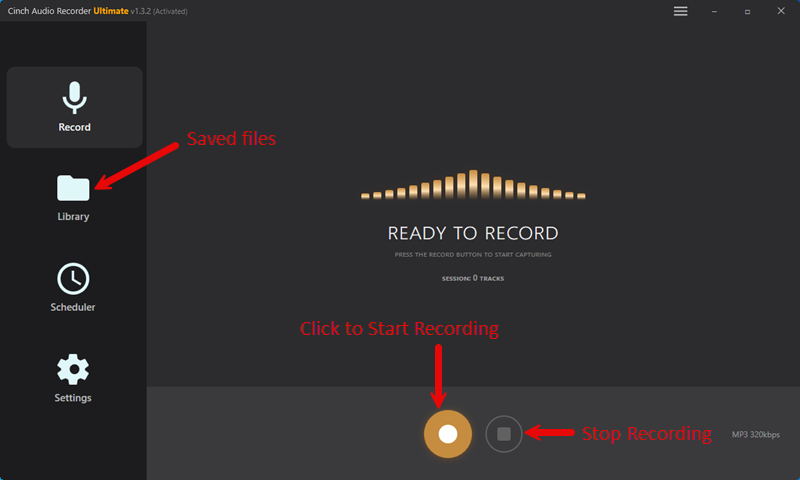
- Download and install Cinch on Windows or Mac from cinchsolution.com
- Start recording: Click the gold circular “Recording” button
- Play your Mixcloud show in any browser (Chrome, Safari, Firefox, etc.)
- Let it run: Cinch automatically detects when music starts/stops and records everything
- Find your files: When finished, tracks appear in the Library with artist names, titles, and cover art
What you should see: A new entry in your Library showing the recorded show, split into individual tracks if the audio fingerprinting succeeded. Each track displays album art and metadata.
If something goes wrong:
- No sound recorded? Check that your system volume is up and not muted
- Tracks not splitting? The show may contain continuous mixes without clear silence gaps—this is normal for DJ sets
- Obscure tracks show as “Unknown”? Cinch couldn’t match them in its database. You can manually edit metadata by right-clicking the track
The software handles track splitting, silence detection, and metadata lookup automatically. You can set minimum track duration (filters out short ads) and output format (MP3/AAC/FLAC/WAV) in Settings.
For Mixcloud specifically, this solves three problems at once: bypasses DRM entirely, delivers files that work on any device, and gives you a tagged library instead of mystery MP3s.
Audacity: The Free (But Manual) Recording Path
If you’re technically comfortable and want zero cost, Audacity can record system audio. Same concept as Cinch—capture what plays through your computer—but without automation.
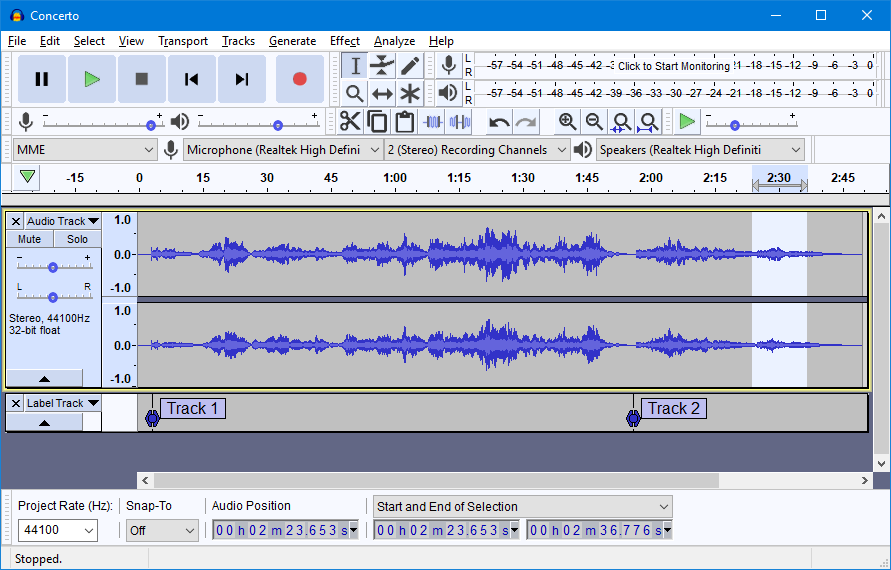
Windows setup:
- Open Audacity
- Click the Audio Setup button (or Edit > Preferences > Audio Settings on older versions)
- Set Host to “Windows WASAPI”
- Set Recording Device to your speakers/headphones (e.g., “Speakers (Realtek)”)
- Set Playback Device to the same speakers
- Click the red Record button, then start playing Mixcloud in your browser
What you should see: The waveform should show visible audio activity (tall blue waves), not a flat line. If you see a flat line, WASAPI Loopback isn’t configured correctly.
Mac setup:
- Install BlackHole virtual audio driver (free, open source)
- Open System Settings > Sound and set Output to “BlackHole 2ch”
- Open Audacity, set Recording Device to “BlackHole 2ch”
- Click Record in Audacity, then play Mixcloud
- Important: Remember to switch your Output back to your real speakers/headphones when done, or you won’t hear any system sounds
Post-recording work is where the time goes. Audacity records one continuous audio file. You manually split tracks by finding silence gaps, export each as separate MP3, find and embed cover art yourself, and edit metadata with another tool—or skip it entirely.
This works. It’s free. But “free” costs you time—especially for long DJ sets where track-splitting manually becomes tedious fast.
Audacity makes sense if you only need a few recordings occasionally, you’re comfortable with audio software, you don’t care about automatic tagging, and free is the hard requirement. If you’re building a library or recording regularly, the time investment adds up. Cinch’s automation pays for itself by skipping the manual post-processing.
Which Approach Should You Use?
Already a Premium subscriber? Start by clearing your cache using the steps above. Fastest thing to try—doesn’t guarantee a fix, but worth a shot.
Need files that actually work offline? Pick based on how often you’ll use it:
- Leaving tomorrow: Use DLMixcloud, verify the file plays before you travel
- Regular offline listening: Download Cinch’s trial, record a 30-minute show, then decide if the automation justifies the purchase
- Must be free: Use Audacity, budget 2-3 hours for setup and testing
Legal note: Recording streaming audio for personal use qualifies as fair use in most jurisdictions. Don’t share or sell your recordings.
Mixcloud’s DRM-based offline system fails in genuinely disconnected scenarios—flights, remote areas, underground commutes. The fix isn’t better cache management. It’s real files instead of encrypted cache that needs server verification.