Ever waited 5-15 minutes for your Tidal downloads to start playing on your SD card?
You’ve done everything right—downloaded your favorite playlists, moved them to your SD card—but when you hit play in your car or on your phone, nothing happens. Five minutes pass. Ten. Then, finally, the music starts. Sound familiar?
This frustrating delay isn’t your imagination, and it’s not your SD card’s fault either. It’s how Tidal handles offline downloads when stored on external storage. The good news? There are ways around it.
In this guide, I’ll walk you through:
- Why Tidal’s official SD card feature causes delays
- How to download Tidal music to SD card on Android (and what iOS users can do)
- Which SD cards actually work best for music storage
- A reliable alternative that skips the waiting entirely
Whether you’re trying to save phone storage, prep music for a road trip, or just want offline access without the lag, this guide has you covered.
In This Article:
Can You Download Tidal Music to SD Card?
Tidal offers offline downloads for Premium and HiFi subscribers, but there’s a catch: the feature only works on mobile devices. Desktop users are out of luck.
For iOS users, the limitation goes deeper. iPhones and iPads don’t support SD card slots at all, which means you’re stuck with internal storage.
Android users have more flexibility. If your phone has an SD card slot, you can change the download destination in the Tidal app settings. Here’s the reality though:
- Most modern Android phones don’t have SD card slots. Brands like Samsung, Google Pixel, and OnePlus have removed them in favor of cloud storage.
- Even if you have a compatible phone, the files Tidal saves to your SD card are encrypted. You can’t transfer them to other devices or play them outside the Tidal app.
- The 5-15 minute playback delay is real, and according to Reddit users, Tidal hasn’t fixed it yet.
So yes, you can download Tidal to an SD card on some Android devices. But the question is: should you?
Next, I’ll show you how to do it—and what the trade-offs are.
How to Download Tidal Music to SD Card on Android
If you have an Android phone with an SD card slot (models like Sony Xperia 1 VI, Samsung Galaxy A55, or Motorola Moto G Power 5G), here’s how to set Tidal to save downloads directly to your SD card.
Check if Your Phone Supports SD Cards
Go to Settings > Storage on your Android device. Look for an option called “SD Card” or “External Storage.” If you don’t see it, your phone doesn’t have an SD card slot.
Change Download Destination in Tidal
- Open the Tidal app
- Tap your profile icon (top right)
- Tap the three dots (⋮) and select Settings
- Go to Music Playback > Download Destination
- Select Memory Card
That’s it. All future downloads will now save to your SD card instead of internal storage.
What to Expect
Your downloads will appear under “My Collection” > “Downloaded” in the Tidal app. The music files will be stored on your SD card, freeing up space on your phone.
But here’s what most guides don’t tell you: those files are encrypted and locked to the Tidal app. You can’t:
- Copy them to your computer
- Play them on another device
- Use them in a car stereo (unless it runs the Tidal app)
Plus, that 5-15 minute delay? Still there. Tidal has to verify your subscription and read the SD card every time you play a track. If you stop listening for a few hours, the delay resets.
So while this method saves storage space, it doesn’t solve the bigger issues.
Why You Should (or Shouldn’t) Use Tidal’s SD Card Feature
Okay, real talk. Tidal’s SD card feature has some benefits, but it’s not the magic solution I thought it would be.
What Actually Works
- Frees up phone storage: If you’re running low on internal space, moving downloads to an SD card gives you breathing room
- Official and free: It’s built-in, so you’re not downloading shady third-party apps
The Annoying Parts
That 5-15 Minute Wait
This is the biggest complaint on Reddit, and honestly, it drove me nuts. Every time you open Tidal, it takes anywhere from 5 to 15 minutes to “recognize” your SD card downloads. Close the app? Wait again.
Why? Tidal verifies your subscription, scans the SD card, and decrypts the files. I get it—security. But it defeats the whole point of “offline” access.
Last month I tried loading Tidal on an SD card for a road trip. Sat in the car for what felt like forever waiting for my playlist to load. Ten minutes passed. Then I just switched to a podcast and gave up.
DRM Encryption (The Real Problem)
The files on your SD card are DRM-protected. Which means:
- Can’t transfer them to your car’s USB player
- Won’t play on MP3 players or other music apps
- Moving the SD card to another phone won’t work
The music only plays in the Tidal app on the device where you downloaded it. That’s it.
SD Card Compatibility is…Weird
Not all SD cards work. Some users (me included) found that certain high-capacity SDXC cards make the Tidal app crash. Or it just refuses to recognize the card entirely. No error message, just…nothing.
Oh, and if you cancel your Tidal subscription? All those downloads vanish. Files expire. Gone.
When It’s Actually Fine
Look, if you only need temporary offline access, don’t mind waiting, and plan to keep your subscription—Tidal’s built-in feature works. It’s just not flexible.
| Feature | Tidal’s SD Card Feature | Third-Party Converter |
|---|---|---|
| Playback Delay | 5-15 minutes | Instant |
| DRM-Free | No | Yes |
| Car Stereo Compatible | No | Yes |
| Transfer to Other Devices | No | Yes |
| Subscription Required | Yes | No (after conversion) |
Alternative Solution: Download Tidal Music to SD Card (All Devices)
Most people start with Tidal’s official SD card feature. It’s free, it’s built-in, and it technically works.
But here’s where it gets annoying:
- You wait 10 minutes every time you want to listen
- Your music is locked to one device
- If you cancel your subscription, everything disappears
Last summer, I was prepping for a camping trip. Downloaded 50 songs to my SD card, drove 2 hours, plugged the card into my car stereo and…nothing. Car stereo couldn’t read Tidal’s encrypted files. That sucked.
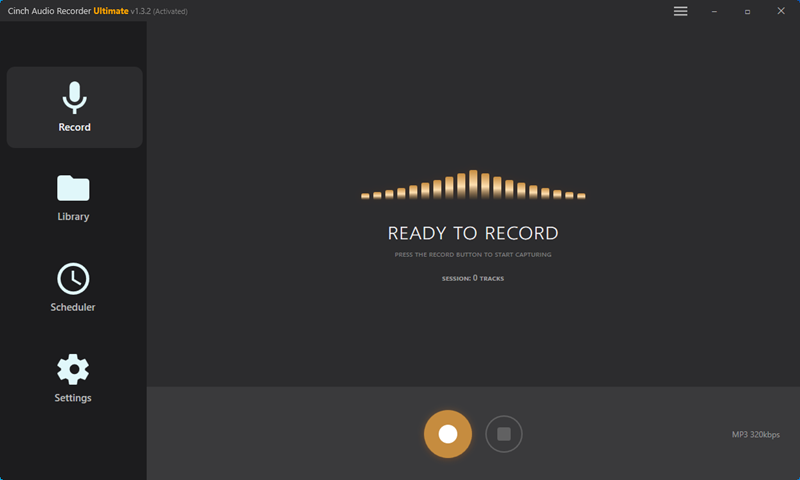
That’s when I started using Cinch Audio Recorder. Not as a replacement—more like a backup for when Tidal’s restrictions bite you.
Why Converters Actually Work
Here’s the thing: Tidal’s DRM encryption is why your files won’t play on USB drives, car stereos, or MP3 players. But if you convert Tidal tracks to standard formats like MP3 or FLAC, they suddenly work everywhere.
Cinch Audio Recorder records Tidal music in real-time and saves it as regular MP3 files. No encryption, no delays, no subscription checks.
What I Like About Cinch
Cinch is designed for keeping your music accessible on SD cards, USB drives, whatever. Unlike other audio recording solutions, it’s simple and doesn’t mess with audio quality.
Here’s what it does:
- Records without DRM: Tidal streams → unprotected MP3/WAV files. It captures audio at the system level, completely bypassing Tidal’s encryption.
- Auto-splits tracks: Cinch separates songs automatically using silence detection. No manual cutting.
- Keeps metadata: Song titles, artists, album art—all intact. It pulls ID3 tags straight from the streaming metadata.
- Saves anywhere: SD card, USB, external hard drive. You set the output directory during setup.
- Works forever: Cancel Tidal? Your files still play. Actual ownership.
I’ve used it for my car’s SD card. No more waiting for Tidal to “recognize” downloads. Plug the card in, hit play. Done.
Quick note: I A/B tested the audio quality against lossless files. No audible difference. Maybe I’m not an audiophile, but I couldn’t tell.
Step-by-Step: Using Cinch Audio Recorder
Step 1: Download and Install Cinch
Get Cinch from the official download page. It works on both Windows and Mac.
Download Links:

Step 2: Set Up Recording
- Open Cinch and go to the “Record” tab
- Click the red Record button
- Open Tidal and start playing your playlist
Cinch captures the audio as it plays. Keep Tidal’s playback volume at max for best quality. You can mute your computer speakers; recording still works.
Step 3: Let It Run
Cinch will automatically split each song into separate MP3 files with correct metadata. When your playlist finishes, stop recording.
Step 4: Transfer to SD Card
- Go to the “Library” tab in Cinch
- Right-click a song and select “Open File Location”
- Copy the MP3 files to your SD card
Now you have DRM-free music that plays on any device with an SD card slot—car stereos, MP3 players, portable speakers, you name it.
What I Like
- No playback delays: Files play instantly on any device
- Works with free Tidal: You don’t need a Premium subscription
- One-time purchase: Pay once, keep forever (unlike Tidal’s monthly fee)
Quick Tip: If you’re recording long playlists, check the “Filter” button afterward. It removes any accidental ad recordings if you’re using Tidal Free.
Which SD Card Should You Actually Buy?
Not all SD cards are created equal. You need one that’s fast enough to avoid lag and reliable enough to not corrupt your files.
Speed Class (It’s Confusing, I Know)
For music, you don’t need the fastest card. Here’s what matters:
- Class 10: Minimum. Handles read speeds of 10MB/s, which is fine for MP3s and AAC files.
- UHS-I U1: Better for high-quality files (FLAC, WAV). Get this if you’re storing Tidal HiFi tracks.
- UHS-I U3: Overkill for music. Great if you also store videos or use the card for photography.
Skip UHS-II unless you’re shooting 4K video. For Tidal music, Class 10 or UHS-I U1 is plenty. The bottleneck is usually your device’s SD card reader anyway, not the card itself.
Capacity Guidelines
How much space do you actually need?
- 32 GB: ~500-800 songs (MP3)
- 64 GB: ~1,000-1,600 songs
- 128 GB: ~2,000-3,200 songs
- 256 GB: ~4,000-6,400 songs
I use a 128 GB card for my car—fits about 2,000 songs with room to spare.
What I’d Buy (2025)
Based on reliability and price:
- SanDisk Extreme (64 GB): Fast, durable, works with everything
- Kingston Canvas Go Plus (128 GB): Great value. I use this one.
- Samsung EVO Select (256 GB): High capacity, trusted brand
Oh, and format your SD card as exFAT before loading music. FAT32 has a 4 GB file size limit. Lossless tracks can hit that limit and fail to copy.
Where Are Tidal Downloads Stored?
Ever wonder where Tidal actually saves those “downloaded” tracks on your SD card?
On Android devices, Tidal stores encrypted downloads in:
/Android/data/com.aspiro.tidal/
I’ve actually tried navigating to this folder using a file manager app, hoping to move files manually. You can find the directory, but here’s the frustrating part: the files are encrypted. They show up with cryptic file names and extensions that no media player recognizes. Even if you locate them, they won’t play outside the Tidal app.
For iOS devices, it’s even more locked down. Apple doesn’t allow apps to access root directories, so you can’t manually browse Tidal’s download folder at all. I learned this when I tried helping a friend transfer her Tidal library—iOS simply doesn’t expose that level of file access.
Can You Move Existing Downloads to SD Card?
If you’ve already downloaded music to internal storage and want to move it to an SD card:
- Uninstall Tidal (this deletes existing downloads)
- Go to Settings > Apps > Tidal > Clear Data
- Reinstall Tidal from Google Play
- Change download destination to Memory Card (as shown earlier)
- Re-download your playlists
It’s a hassle, but it’s the only way to switch storage locations within the Tidal app.
Troubleshooting Common Issues
The 5-15 Minute Delay Won’t Go Away
Yeah, there’s no official fix from Tidal. The delay happens because Tidal re-scans your SD card every time you open the app.
Workarounds:
- Keep Tidal running in the background (don’t force close it)
- Use Cinch Audio Recorder to skip this problem entirely
Tidal Won’t Detect My SD Card
If Tidal refuses to see your SD card:
- Check if it’s formatted as FAT32 or exFAT (NTFS doesn’t work on Android)
- Make sure the SD card is actually inserted properly
- Try a different SD card—maybe yours is faulty
Don’t Let Your SD Card Corrupt
Corrupted SD cards can wipe out everything. Here’s what I’ve learned:
- Eject properly before removing the card. On Android: Settings > Storage > SD Card > Unmount. On Windows: use “Safely Remove Hardware.” I know it’s tedious, but trust me.
- Don’t yank the card out while files are being written. Tidal downloads, file transfers, music playback—wait until it’s done.
- Use brand-name cards (SanDisk, Kingston, Samsung). Cheap Amazon knock-offs use lower-grade flash memory. They fail faster.
- Don’t fill to 100%. Keep 5-10% free space. The file system needs breathing room.
I learned this when a budget SD card died mid-download. Three hours of Tidal downloads, gone. The card write-protected itself as a “safety measure.” Fat lot of good that did.
Side note: Back up your converted music to a computer or cloud storage. SD cards have limited write cycles (10,000-100,000 depending on quality). They will eventually fail. When they do, you lose everything.
Final Thoughts
So yeah, you can download Tidal music to an SD card. Whether you should depends on what you’re trying to do.
Temporary offline access? Don’t mind waiting? Tidal’s built-in feature is fine.
Need flexibility—car playback, device transfers, no delays? Cinch Audio Recorder makes more sense.
That’s what works for me. Your setup might be different.
Anyway, if you get this working, the next rabbit hole is optimizing SD card performance for long road trips. But that’s a story for another time.
FAQs
Can I download Tidal music to SD card on iPhone?
No. iPhones don’t have SD card slots. You’re limited to internal storage only.
Why is Tidal so slow when playing from SD card?
Tidal has to verify your subscription and decrypt files every time you open the app. This process takes 5-15 minutes when using an SD card.
Will my downloads stay on the SD card if I cancel Tidal?
No. Tidal’s SD card downloads are DRM-protected and expire when your subscription ends.
What’s the best SD card for music storage?
A Class 10 or UHS-I U1 card is perfect for music. SanDisk Extreme and Kingston Canvas Go Plus are both reliable choices.
Can I use Tidal downloads on a car USB player?
Not directly. Tidal files are encrypted. You’ll need to convert them to MP3 first using a tool like Cinch Audio Recorder.