Last month, I saw a DJ on Reddit posted something that made me wince. They’d spent hours setting up hot cues for 20 tracks from Beatport streaming. Practice sessions went great. Then they bought the files to play out officially.
All their cue points? Gone.
rekordbox treated the downloaded files as completely different tracks. Hours of preparation work, vanished.
Most guides skip that part. Here’s the complete truth about getting Beatport music to MP3—including the workarounds DJs actually use (and the ones that’ll waste your time).
In This Article:
Understanding Beatport’s Download Ecosystem
What Is Beatport and Why DJs Use It

Beatport’s been the go-to source for electronic music since 2004. If you’re into house, techno, trance, or any of the 40+ sub-genres they cover, you’ve probably hit their site.
The platform hosts over 13 million tracks. Not just quantity—it’s curated, tagged properly, and actually works in every major DJ software.
What makes it different from Spotify or Apple Music:
- Tracks drop on Beatport before anywhere else (sometimes weeks early)
- Every file comes with proper metadata (BPM, key, genre tags)
- Native integration with rekordbox, Traktor, Serato, Engine DJ
- Both streaming and permanent downloads available
- Actual DJ-focused features (extended mixes, stems, acapellas)
Most DJs start with streaming for discovery, then buy what they’ll actually play repeatedly.
Theory, anyway.
Beatport’s File Formats: MP3, WAV, AIFF, FLAC
When you buy a track on Beatport, you pick a format at checkout. Here’s what each actually means:
MP3 (320kbps): Standard compressed format. Smaller files (7-8MB per track), excellent tagging support, universally compatible. This is what most DJs use.
WAV (16-bit/44.1kHz): Lossless, uncompressed audio. Perfect sound quality, but here’s the catch—terrible metadata support. You’ll end up with tracks labeled “Track 01” with no artist info.
AIFF (16-bit/44.1kHz): Apple’s answer to WAV. Same lossless quality, but actually supports proper tagging. If you want uncompressed files, this is the better choice.
FLAC: Compressed lossless format. Same quality as WAV/AIFF but 30-40% smaller. The newest option and pretty solid. Load times are faster than WAV too.
I learned this the hard way after buying 50 WAV files in 2023. Spent hours—maybe three evenings?—manually tagging everything in Mp3tag.
Now? AIFF or MP3 only.
Oh, compatibility note: Older CDJs (pre-2016) don’t support FLAC. If you’re playing on house gear, check first.
Method 1 – Official: Purchasing and Downloading from Beatport
How Beatport’s Store Actually Works

Beatport pricing is straightforward. Most tracks run $1.29 to $2.49 depending on format and label. Extended mixes cost more. Albums give you a bulk discount.
But here’s what nobody mentions upfront: the download window.
You get 48 hours to download your purchases after buying. Miss that window? You’ll need to re-download.
And here’s where it gets interesting.
Free accounts: 20 re-downloads per track. Ever.
Sounds like plenty. Until your laptop dies. Or you accidentally delete your music folder. Or your backup drive fails.
Then you’re counting downloads like they’re precious.
I hit this limit on three tracks I bought in 2022. Had to re-buy them. Still annoyed about it.
Essential subscribers ($10.99/month) get unlimited re-downloads. That’s actually a big deal if you’ve been buying from Beatport for years. More on this workaround later.
Step-by-Step: Buying Beatport Tracks as MP3
The actual purchase process is clean:
- Create an account at beatport.com (free)
- Search for your track or browse the Top 100 charts
- Click the buy button—it shows format options
- Select MP3 (or your preferred format)
- Add to cart, checkout with credit card or PayPal
- Go to “My Library” in the top menu
- Click “Downloads”—your files are there
- Download immediately (remember that 48-hour window)
The MP3s come with ID3 tags already set. Artist, title, album art, BPM, key—all there. Just drag into rekordbox and you’re done.
Pro tip: Set up a dedicated music folder before you start buying. Keep everything organized from day one. Your future self will thank you.

The Essential Subscription Workaround Nobody Tells You
So you hit that 20 re-download limit. Now what?
Option 1: Buy the tracks again.
That hurts.
Option 2: The Essential subscription hack.
This comes straight from Reddit’s DJ community:
Subscribe to Beatport Essential ($10.99/month). They offer a free trial too. This gives you unlimited re-downloads.
Log in, go to your purchase history, re-download everything you need. Cancel the subscription.
Yeah, it feels like gaming the system. But you already bought these tracks. You’re just getting your files back.
One user posted: “I got 90% of my library back this way after a hard drive crash. Saved over $300.”
Just don’t abuse it. Beatport could crack down on this. Right now? It works.
When this makes sense:
- Hard drive failure
- Lost laptop
- Switching to a new computer
- Consolidating old purchases
When to just buy Essential: If you’re purchasing 10+ tracks per month, the subscription pays for itself. Unlimited re-downloads become worth it.
Method 2 – Audio Recording Software: The DJ’s Backup Solution
Why DJs Use Recording Software
Look, Beatport streaming is great for discovering music. The library is massive. Integration with DJ software is smooth.
But you can’t rely on internet at gigs.
Club WiFi drops. Cell data gets throttled. Hotel internet is terrible. Even when streaming works, you’re trusting that Beatport’s servers are up on the night you’re playing.
That’s where recording software comes in.
This isn’t about pirating music. Most DJs using recording tools are paying for Beatport subscriptions. They’re capturing streaming tracks as insurance—not as their primary source.
Think of it like this: You practice with streaming all week. Saturday you’ve got a gig.
Do you trust the WiFi?
Or do you have offline backups ready?
Yeah, me neither.
Cinch Audio Recorder – Built for Music Lovers
I’ve tried different recording tools over the years. Audacity required too much manual splitting. OBS was overkill. Most online recorders produced questionable quality.
Then I found Cinch Audio Recorder.
Not as a replacement for buying tracks—more like a backup plan. When you need offline access fast. Or want to capture streaming sessions without the download limits anxiety.
What actually matters:
Key Features for Beatport Recording:
Cinch connects directly to your system audio. Whatever plays through your speakers, it captures—at the exact same quality. No reencoding, no quality loss.
The auto-split feature is brilliant. Play a Beatport playlist, and Cinch detects the silence between tracks. Each song saves as its own file automatically. No manual editing.
ID3 tags get captured too. Artist, title, album art—all pulled automatically. Sometimes you need to tweak them, but it’s better than starting from scratch.
You can save as MP3 (up to 320kbps), WAV, FLAC, M4A, or AAC. I stick with MP3 for everyday use, WAV when I want archival copies.
Silent recording mode is clutch. Mute your speakers while Cinch captures the audio internally. Great when you’re recording late at night. Or at the office.
Built-in ad filter: If you’re using Beatport’s free streaming tier (which has ads between tracks), Cinch can automatically detect and skip them.
Saves you from editing out 30-second promo spots later.
What I actually like about it:
Set it up once, then forget it exists. Just hit record and play your Beatport playlist. Come back later and all your tracks are filed away, named correctly, with metadata intact.
Works with Beatport Streaming, Beatport LINK integration, or just playing tracks in your browser. Doesn’t care where the audio comes from.
Interface isn’t fancy, but it’s straightforward. No learning curve.
Get Cinch Audio Recorder:


How to Record Beatport Tracks with Cinch
The actual process takes maybe 5 minutes to set up:
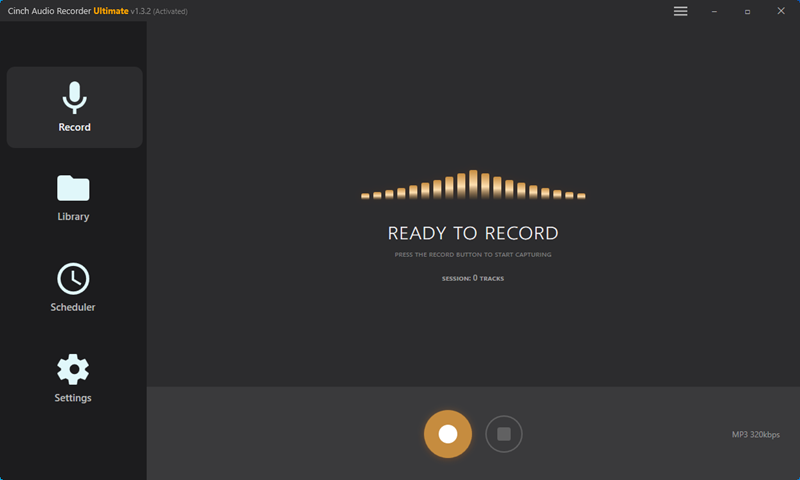
Step 1: Install Cinch Audio Recorder
Download from the official site. Installation is standard—no driver installs, no system audio routing. Just click through and launch.
Step 2: Configure Settings
Open Settings (gear icon). Choose your output format—I use MP3 at 320kbps to match Beatport quality. Enable auto-track detection so songs split automatically.
Output folder: Pick somewhere you’ll remember. I use a “Recorded Music” folder separate from my main library.
Step 3: Start Recording
Click the red Record button. Cinch is now capturing whatever plays.
Open Beatport—website, streaming web app, or integration in rekordbox. Play your playlist.
Cinch shows real-time audio levels. When silence is detected (between tracks), it finalizes the current file and starts a new one. Each track saves separately.
Step 4: Access Your Files
Click the Library tab in Cinch to see all recorded tracks. They’re organized by recording date.
Right-click any track > “Open File Location” to find the actual MP3 files on your computer.
Import them into rekordbox, Traktor, Serato, or whatever you use. They’ll have artist/title info already tagged.
That’s it. Takes longer to read than to do.
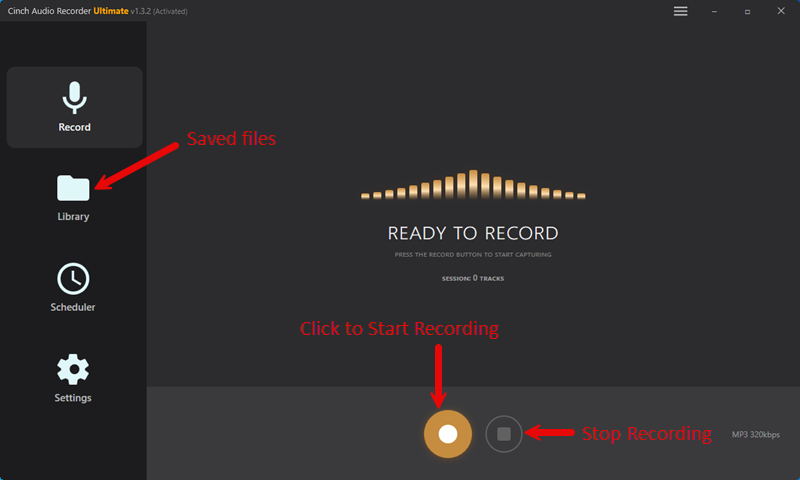
Quick tip: Record a test track first. Verify the quality is what you want before recording an entire playlist.
Other Recording Software Options
Just to be complete, here are alternatives:
Audacity: Free and open-source. Works fine, but you have to manually split tracks after recording. The interface is… let’s say “functional.” If you don’t mind editing, it’s solid.
OBS Studio: Powerful streaming/recording software. Can capture audio, but it’s designed for video content. Setup is more complex than you need for just music.
Soundflower (Mac): Audio routing tool. Requires technical setup and doesn’t record on its own—you need it plus another recorder.
Works, but there are easier options.
These all work. They require more setup, technical knowledge, or manual editing. For music recording specifically, Cinch is more straightforward.
Method 3 – Beatport Streaming with DJ Software Integration
Understanding Beatport LINK and Beatport Streaming
Beatport offers two subscription services that DJs actually use:
Beatport Streaming: Consumer-grade music streaming. Listen on website, mobile app, or Beatport DJ web interface. Full-length track playback, unlimited playlist creation. Starts at $10.99/month.
Beatport LINK: The DJ software integration feature. Adds Beatport’s streaming catalog directly into rekordbox, Traktor, Serato, Engine DJ, djay, VirtualDJ, and more. Only available with Advanced ($15.99/month) or Professional ($29.99/month) plans.
Here’s the breakdown:
| Plan | Price | Full Playback | DJ Integration | FLAC Audio | Offline Library |
|---|---|---|---|---|---|
| Essential | $10.99 | ✓ | ✗ | ✗ | ✗ |
| Advanced | $15.99 | ✓ | ✓ | ✗ | ✗ |
| Professional | $29.99 | ✓ | ✓ | ✓ | ✓ (1000 tracks) |
Advanced is the sweet spot for bedroom DJs. Streaming integration in your software for $16/month. That’s the cost of like 8 track downloads.
Professional makes sense for gigging DJs who need FLAC quality and offline storage. The 1000-track offline library means you can cache your essentials for internet-free gigs.
Key difference: Streaming is for practice and discovery. You don’t own these tracks. Stop paying, lose access. For building a permanent library, you still need to buy downloads.
Method 4 – Online “Free” Downloaders: What You Need to Know
The Reality of Free Beatport Downloaders
Tools like TubeNinja, PasteDownload, and TubeRipper show up in every “how to download Beatport” guide. Usually with glowing recommendations.
Let’s be honest about what they actually are:
They work… sometimes. Success rate is maybe 50%. Depends on the track, the time of day, and whether Beatport’s blocked them recently.
Quality is unpredictable. These sites claim 320kbps MP3s. Reality? You’re getting whatever they manage to rip. Could be 256, could be 192, could be transcoded garbage.
No way to verify.
Aggressive ads and potential malware. Free downloaders need revenue. That means pop-ups, redirects, and sketchy ad networks. I’ve seen some try to install browser extensions. Others trigger Windows security warnings.
Legal grey area at best. You’re not buying the track. You’re not streaming with permission. This is unauthorized downloading of copyrighted content. Beatport and labels aren’t cool with it.
No metadata/ID3 tags. Most ripped files come as “beatport-track-12345.mp3” with zero artist or title info. You’re manually tagging everything.
Beatport actively blocks these services. They update their streaming protocols specifically to break these tools. What works today might not work next month.
My take: If you’re going to test one of these tools, at least use a virtual machine. Never enter payment info. Don’t trust the download quality for professional use.
For bedroom practice with throwaway files? Maybe.
For building a real library? Absolutely not.
Why DJs Avoid These Tools
Unreliable for building sets. You can’t plan a gig around tools that might not work when you need them.
Files often lack proper tags. Spending hours manually tagging defeats the time-saving purpose.
Quality inconsistent. That “320kbps” file might sound fine at home. Play it on a club system and the compression artifacts are obvious.
Risk of account suspension. Beatport monitors this stuff. Using ripof tools could get your account flagged or banned. Not worth losing access to legitimate purchases.
Professional reputation matters. Playing low-quality rips at a paid gig reflects on you. Promoters and club owners notice.
Better alternative: Use Beatport’s 30-day free trial for streaming. Record what you need with legitimate software. At least you’re working within their service.
Or just buy the tracks. At $1.50 each, a weekend beer costs more than three downloads.
Audio Quality Deep Dive: Do MP3s Sound Bad on Club Systems?
The MP3 vs WAV Debate (Settled)
This argument’s been going for 20 years.
Let’s end it.
320kbps MP3 on a club system: Indistinguishable from WAV for 99% of listeners.
That’s not my opinion. That’s testing from DJs with 10+ years experience on professional sound systems.
Reddit user (DJ for 15+ years): “I’ve played 320kbps MP3 files on Function-One systems at festivals. Never had a complaint. Never noticed a difference myself.”
Another: “Switched my entire library to MP3 in 2019. Played over 100 gigs since. Nobody—not other DJs, not sound engineers—has ever mentioned quality issues.”
Why the difference is inaudible:
Club environments are loud. Ambient noise from crowds, ventilation, and other sources masks subtle audio details.
Room acoustics matter more than file format. A bad-sounding room ruins even perfect WAV files. A well-tuned room makes MP3s shine.
Most listeners don’t have trained ears for compression artifacts. Even audiophiles struggle in blind tests under controlled conditions.
Add club noise?
Forget it.
When WAV/AIFF actually matters:
Extreme pitch bending (±8% or more). Stretching audio that far can reveal compression artifacts. Most DJs don’t pitch that drastically.
Heavy processing and EQ adjustments during the mix. If you’re cutting frequencies hard or boosting aggressively, lossless gives you more headroom.
Archival and mastering purposes. Producers working on tracks need lossless source files. DJs playing finished masters? MP3 is fine.
Peace of mind (placebo is real). Some DJs just feel better with WAVs. If that confidence improves your performance, great. But it’s psychological.
Expert quote from Beatport forums: “Played both MP3 and WAV of the same track back-to-back on Void Acoustics system. Even I couldn’t reliably tell them apart. And I’m the guy who bought the WAVs.”
Bottom line: Save your money and drive space.
Buy MP3s.
File Size and DJ Workflow Considerations
Beyond audio quality, file size affects your actual workflow:
| Format | Quality | File Size (3min track) | DJ Software Load Time | USB Capacity (128GB) |
|---|---|---|---|---|
| MP3 320kbps | Excellent | 7-8 MB | Instant | ~16,000 tracks |
| WAV 44.1/16 | Lossless | 30-35 MB | 1-2 sec | ~3,600 tracks |
| AIFF 44.1/16 | Lossless | 30-35 MB | 1-2 sec | ~3,600 tracks |
| FLAC | Lossless | 20-25 MB | <1 sec | ~5,000 tracks |
Real-world impact:
USB stick capacity: You can fit 4-5x more MP3s. For DJs with large libraries, this matters. Carrying your entire collection on one stick vs needing multiple.
rekordbox database loading: Smaller files mean faster software startup. Open a library with 10,000 WAVs vs 10,000 MP3s—you’ll feel the difference.
Track browsing: Scrolling through large collections is noticeably smoother with MP3s. rekordbox doesn’t have to load as much data per track.
Backup time: Full library backups take 4x longer with WAVs. If you’re backing up to cloud storage, that’s also 4x the upload time and storage costs.
SSD vs HDD: On modern SSDs, the speed difference is negligible. But if you’re still using spinning hard drives, MP3s are noticeably faster to read.
My recommendation: Use MP3 for 95% of your library. Reserve lossless (AIFF, not WAV) for tracks you’ll process heavily or tracks you play constantly at peak times.
There’s no prize for largest file size.
Trust me on this.
Troubleshooting
“I Can’t Re-download My Purchased Tracks”
Problem: Hit the 20 re-download limit on free accounts.
Solution 1 – Essential subscription trick:
Subscribe to Beatport Essential ($10.99/month). Free trial available. This unlocks unlimited re-downloads for all past purchases. Log in, go to My Library > Downloads, grab everything.
Cancel subscription after if you want.
Solution 2 – Contact support:
Beatport support sometimes resets download limits for legitimate cases. Hard drive failure, stolen laptop, house fire—they’ve helped people before.
Worth trying. Email support@beatport.com with your situation.
Solution 3 – Preventive measures:
Never rely on re-downloading. Ever.
Backup strategy should be:
- Local storage (computer internal drive or SSD)
- External hard drive (updated monthly)
- Cloud storage (Dropbox, Google Drive, or similar)
3-2-1 rule: 3 copies, 2 different media types, 1 off-site.
This applies to all digital music, not just Beatport.
“My Downloads Are Missing Metadata”
Problem: Files show as “Track 01” with no artist/album information.
Common with: WAV files especially. WAV has limited metadata support.
Fix for MP3/AIFF: Should have full ID3 tags by default from Beatport. If missing, there was a download error. Re-download the file.
Fix for WAV: You’ll need to add tags manually.
- Windows: Use Mp3tag (free, excellent tagging software)
- Mac: Use Kid3 (free) or iTunes/Music app
- Both platforms: MusicBrainz Picard (automatic tag lookup)
Or convert WAV to AIFF. iTunes/Music app can do this without quality loss. AIFF supports full tagging.
Prevention: Choose MP3 or AIFF at checkout. Skip WAV unless you have specific workflow reasons.
“Beatport Track Won’t Load in My DJ Software”
Troubleshooting checklist:
- Check file format compatibility: Older CDJs and controllers don’t support FLAC. Very old units might not even do AAC properly. MP3 and WAV are universal.
- Verify file isn’t corrupted: Try playing in VLC Media Player. If it works there but not in DJ software, it’s a software issue not file issue.
- Update DJ software: Newer formats require newer software versions. rekordbox 5.x might not support files that rekordbox 7.x handles fine. Check for updates.
- File path contains special characters: Some software chokes on folder names with symbols or non-English characters. Keep paths simple: “Music/Techno/Artist Name/Track.mp3”
- Reimport track: Remove from library, then add again. Sometimes the database gets confused.
- Check disk permissions: If files are on external drive, make sure software has read access.
- File association issues: Right-click file > Properties > verify correct program is set to open it.
Most of the time it’s format compatibility. Converting to MP3 usually fixes it.
Conclusion
Beatport’s not perfect.
The 48-hour download window feels arbitrary. The 20 re-download limit is frustrating. And losing cue points when you switch from streaming to owned files?
Still annoying in 2025.
But it’s still the best source for electronic music.
My setup after years of figuring this out:
Professional Beatport Streaming for discovery. I browse charts, test tracks in mixes, build playlists of what actually works.
Buy the tracks I’ll play multiple times. Usually 5-10 per month during practice sessions. Wait for sales when possible.
Record streams with Cinch as insurance. Not for everything—just tracks I’m testing or practicing with before deciding to buy.
Triple backup immediately. External drive gets synced weekly. Cloud backup runs automatically. rekordbox database exports monthly.
Your workflow might be different. Maybe you’re all-in on streaming. Maybe you prefer owning everything.
The important thing? Have a system that works when the internet doesn’t.
What’s your Beatport workflow? And have you hit that 20 re-download limit yet?
(I’d bet money most of you have.)
FAQ
Q1: Can I download Beatport music for free?
No. Beatport only sells music or offers paid streaming plans ($10.99–$29.99/month). Recording streams is against the terms, though rarely enforced for personal use.
Q2: Best format for DJs?
Use MP3 320kbps — great sound, small size, full metadata.
Use AIFF if you need lossless with tagging.
Avoid WAV — same quality as AIFF but poor metadata support.
Q3: Can I re-download purchased tracks?
Yes. Free users get 20 re-downloads per track. Paid plans allow unlimited re-downloads. Always download right after purchase.
Q4: Is 320kbps MP3 worse than WAV in clubs?
No. Tests show no audible difference on pro systems. MP3 saves money and storage.
Q5: Can I transfer cue points from Beatport streaming to downloads?
Not easily. Some tools try (Rekordbox CloudDirectPlay, Lexicon, etc.), but results vary. Most DJs redo cue points manually.