

“If I cancel Tidal, what happens to the songs in my library? Will I have to re-add all 9,500 songs I’ve saved if I decide to rejoin?”
I saw this question on Reddit’s Tidal community last month. The user had spent years building this massive collection. That’s a lot of time curating playlists, discovering new artists, and organizing everything just right.
Here’s the reality: Your playlist stays intact, but those downloaded tracks? They become digital ghosts—visible but unplayable.
This guide will show you exactly what happens when you cancel Tidal, whether you can recover your music later, and most importantly, how to actually keep your favorite tracks forever without relying on subscription status.
In This Article:
Understanding Tidal’s Subscription and Download System

Tidal offers three main subscription tiers as of October 2025. The free tier (Tidal Access) lets you browse and preview 30 seconds of each track—basically window shopping for music. Then there’s Tidal HiFi at $10.99 per month for lossless quality, and Tidal HiFi Plus at $19.99 per month with Hi-Res audio up to 24-bit/192kHz. They also have family and student plans with discounts.
If you’re on a paid plan, you can download music for offline playback. The audio quality options range from Standard to HiFi to HiRes. A 4-minute HiFi track typically runs about 40-50MB, while HiRes can push 80-100MB depending on the bitrate. Or maybe closer to 100MB—depends on the track, honestly.
But here’s the catch—those downloads come with DRM protection.
Digital Rights Management locks the files to your Tidal account and subscription status. You can’t export them, share them, or play them outside the Tidal app. It’s more like renting than owning.
Think of it this way: Spotify and Apple Music do the same thing. But Apple Music actually deletes your entire library 90 days after cancellation. Tidal at least keeps your playlists and favorites indefinitely. Small win, but still.
Oh, quick tip: Tidal runs a 30-day free trial for new users, and sometimes you can extend it another 60 days for just $2. That’s three months to test the service before committing. Worth checking if that deal’s still active.
What Really Happens When You Cancel Tidal Subscription
Immediate Effects After Cancellation
When you cancel, you get to use Tidal until your next billing date. The countdown starts from there.
After your subscription actually ends, here’s what changes immediately:
Your downloaded music becomes unplayable. The files sit on your device taking up storage, but Tidal’s DRM lock kicks in. Tap a song, and you’ll see an error about needing an active subscription.
You can’t download anything new. The download button either disappears or shows a subscription prompt.
Streaming quality drops. If you’re in a region with Tidal Access (the free tier), you’re limited to 30-second previews. No region with free tier? You can’t stream at all.
Your playlists though? They survive.
I tested this myself—canceled for one day to switch payment methods. Came back to find my 500+ song library exactly as I left it. The playlists, favorites, followed artists, all there. Just couldn’t play the downloaded tracks during that gap. Bit annoying, but expected.
A Reddit user shared a similar experience: “I temporarily cancelled for a day to use the Best Buy year-long subscription and they were still there.” That’s reassuring if you’re worried about losing years of curation.
Comparison with Other Streaming Services
Different services handle cancellations differently. Here’s the breakdown:
| Service | Playlists After Cancel | Downloads After Cancel | Data Retention Period |
|---|---|---|---|
| Tidal | ✅ Keep Forever | ❌ Locked/Unplayable | Permanent |
| Spotify | ✅ Keep Forever (Free Tier) | ❌ Locked/Unplayable | Permanent (with ads) |
| Apple Music | ⚠️ Deleted After 90 Days | ❌ Locked/Unplayable | 90 Days |
Apple Music’s 90-day deletion policy is brutal. Miss that window, and you’re starting over from scratch. At least Tidal doesn’t hold your playlists hostage.
Spotify offers the best fallback—their free tier keeps you in the ecosystem with ads. You lose on-demand playback and downloading, but your library remains accessible.
Tidal Access (where available) sits somewhere in the middle.
Better than Apple’s scorched-earth approach, at least.
Can You Resubscribe and Get Your Music Back?
Short answer: Yes, everything comes back.
When you resubscribe to Tidal, your playlists reappear instantly. All your favorited tracks, followed artists, and curated collections return exactly as you left them. It’s like the subscription never lapsed.
But—and this is important—you’ll need to re-download your music for offline playback. The files don’t automatically restore. You’re not starting from zero though. Just hit the download button on your playlists again. Takes a few minutes depending on your library size and internet speed.
That Reddit user with 9,500 songs? Turns out they worried for nothing. Multiple users confirmed: “Yes, if you are pertaining to your playlist. Yes it’s still gonna be there. You may still access it.”
There’s a practical difference between temporary cancellation and long-term cancellation:
Temporary cancellation (1-6 months): Great for when you’re tight on cash or want to try another service. Your Tidal library waits patiently. I’ve done this twice—once to test Apple Music, another time during a broke month.
No data loss either time.
Long-term cancellation (6+ months): Still safe, but I’d consider backing up your playlists just in case. Services like TuneMyMusic or Soundiiz can export your collection to a CSV file or transfer to another platform. Insurance costs nothing.
Here’s what I learned the hard way: Tidal occasionally removes tracks from their catalog due to licensing issues. If you had a rare live recording or region-specific release in your favorites, it might not be there when you return. No streaming service can guarantee permanent catalog access. That’s why actually owning the files matters.
The Best Way to Keep Tidal Music Forever: Cinch Audio Recorder
Most Tidal users rely on the official download feature for offline listening. That works fine—as long as you keep your subscription active.
I actually used Tidal’s built-in download for months. It’s convenient, the audio quality is excellent, and having HiFi tracks on my phone for commutes was perfect.
But here’s the thing: those downloads are encrypted. The moment your subscription ends, they become unplayable files taking up storage space.
When the Limitations Hit Home
Here’s where it gets frustrating:
- You don’t own the music – You’re essentially renting access, even for downloads
- Can’t play on other devices – Your carefully curated library is locked to the Tidal app only
- No backup option – If Tidal changes their terms or removes tracks, you’re out of luck
- Switching services is painful – Moving to Spotify or Apple Music? Start from scratch
Last month, a friend wanted to share some tracks from his Tidal playlist for our road trip. The downloaded files? Useless on our car’s USB player.
That’s when the limitations really hit home.
The Solution That Actually Works
That’s when I started using Cinch Audio Recorder.
Not as a replacement for Tidal—more like insurance. For when you need actual ownership of your music.
Why it helps:
Real Ownership: Records Tidal streams as standard audio files (MP3, M4A, FLAC, WAV). They’re yours to keep forever, subscription or not.
Work Everywhere: Play your saved tracks on any device—car USB, old MP3 player, non-smart speakers, or share with friends.
Quality Preservation: Cinch captures audio directly from your sound card using CAC technology, maintaining the original playback quality.
Smart Organization: Automatically splits tracks and tags them with song title, artist, and album artwork using ACRCloud recognition.
My Setup and Experience
I’ll walk you through exactly how I set this up.
Step 1: Install and Launch
Downloaded Cinch from the official website. Installation took less than a minute. No complicated setup required—just standard Windows/Mac installation prompts.
Step 2: Hit Record
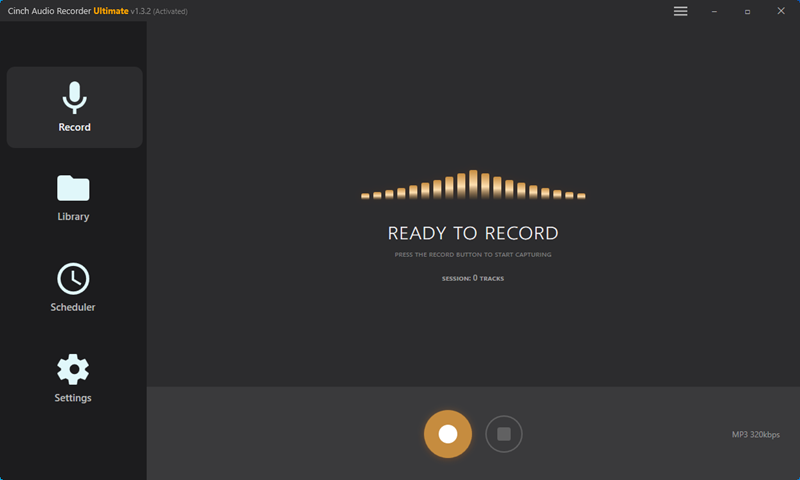
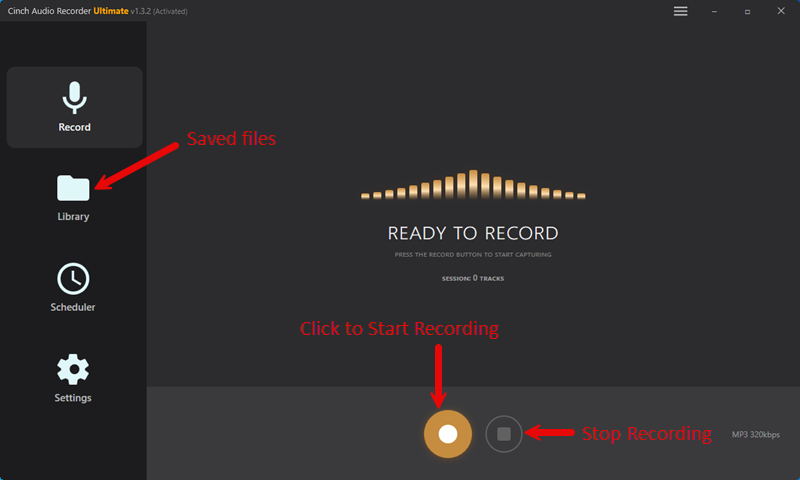
Opened Cinch, clicked the Record tab, then hit the red Record button. That’s it. Cinch is now ready to capture any audio playing on my computer.
Step 3: Play Tidal Music
I opened the Tidal app and started playing a playlist I wanted to keep. Cinch automatically detected each track and split them into individual files.
The first time I did this, I kept checking if it was actually working.
It was. Watched the Library tab populate with tracks as each song finished. Felt like magic, honestly.
Step 4: Check the Results
After recording, I went to the Library tab. Every song had proper tags, album art, and was saved as high-quality MP3 files. The auto-recognition worked perfectly—99% of tracks were correctly identified.
That 1% that didn’t auto-tag? Obscure live recordings and indie artist demos. Fair enough. Cinch includes a built-in tag editor for manual fixes. Right-click any track, hit “Edit Tags,” and you’re done in 30 seconds.
What I Actually Like About It
Silent Recording: I can mute my computer speakers while Cinch still captures perfect audio. Great for recording overnight playlists while you sleep.
Ad Filtering: For Tidal Free users, there’s a Filter button that removes those annoying audio ads between tracks. One click cleanup. I don’t use Tidal Free anymore, but I tested this feature—works surprisingly well.
Batch Recording: Just let a playlist run. Cinch handles everything automatically—no need to record each song manually. I recorded a 50-song playlist while making dinner. Came back to 50 perfectly organized MP3s.
Bonus Feature: The ringtone maker is surprisingly useful. I turned my favorite Tidal track into my phone ringtone in about 2 minutes. Select the section you want, export as M4A for iPhone or MP3 for Android. Done.
Quick Tip: Keep Tidal’s player volume at normal or maximum level during recording. Cinch captures audio at the playback volume, so low volume means quieter recordings.
I learned this after recording five songs at 20% volume. They played fine, just really quiet. Re-recorded them properly the next day.
Get Cinch Audio Recorder
Both Windows and Mac versions available:


Alternative Solutions to Save Tidal Music
Cinch isn’t the only option out there. Let me break down what else is available.
Other Music Converters
Several tools claim to download Tidal music. Here’s how they compare:
| Tool | Speed | Output Formats | Price |
|---|---|---|---|
| Cinch Audio Recorder | Real-time | MP3, M4A, FLAC, WAV, AAC | $25.99 |
| NoteBurner | 10X speed | MP3, FLAC, WAV, ALAC | ~$39.95 |
| Tidabie | 10X speed | MP3, AAC, FLAC | ~$39.95 |
| ViWizard | 35X speed | MP3, FLAC, WAV | ~$34.95 |
High-speed converters work faster but cost more—$35-$40 vs Cinch’s $26. They can convert a 50-song playlist in 5-10 minutes instead of full playback time.
Cinch offers the best value with extras like the ringtone maker and ad filter. The real-time recording isn’t a dealbreaker—just let it run overnight for large playlists. That’s what I do, anyway.
Other Methods Worth Mentioning
Free Audio Recorders (Audacity)
Tools like Audacity can record system audio, but they lack intelligence:
- ❌ No automatic track splitting
- ❌ No ID3 tag recognition
- ❌ Manual editing required for each song
I tested this once. Recorded a 20-song playlist in an hour, then spent three more hours splitting and tagging.
Not worth it.
Telegram Music Bots
Some bots claim to download Tidal tracks. Skip these—they’re unreliable, quality varies wildly, and you still need an active subscription to get URLs anyway.
Before You Cancel: Essential Preparation Checklist
If you’re planning to cancel Tidal, do these things first. Trust me, you’ll thank yourself later.
Pre-Cancellation Checklist
1. Export Your Playlists (If Switching Services)
Use TuneMyMusic or Soundiiz to transfer playlists or export to CSV. These tools are free for basic transfers.
2. Record Your Most Important Music
Use Cinch Audio Recorder to capture your top playlists. Priority: hard-to-find tracks, live recordings, exclusive content.
Time estimate: A 50-song playlist takes about 3 hours to record at normal speed.
3. Check Your Billing Date
You can access Tidal until your next billing cycle. Don’t cancel too early—maximize your remaining days.
4. Test Your Recordings
Before canceling, verify files play correctly. Check ID3 tags and album art. Nothing worse than discovering corrupted recordings after you’ve canceled.
Pro Tip: Look for student discounts or family plan sharing before canceling. Splitting a family plan among five people brings cost down to $4-5 per person. Way cheaper than individual plans.
Troubleshooting Common Issues
Issue 1: Recording Quality is Poor
Set Tidal volume to 80-100% before recording. System volume can be muted, but the app’s player volume matters.
Issue 2: Tracks Not Splitting Automatically
In Cinch settings, adjust the silence split sensitivity. Default works for 90% of cases. Maybe 95%.
Issue 3: Missing ID3 Tags
Use Cinch’s built-in tag editor. Right-click the track, select “Edit Tags,” and fill in details. Takes 30 seconds per song.
Issue 4: Recording Picks Up System Sounds
Enable Do Not Disturb mode before recording. I once recorded a playlist with notifications on—every “ping” got captured. Learn from my mistake.
Issue 5: Files Too Large
Switch to MP3 (320kbps) for smaller files. A 4-minute song: MP3 is around 10MB vs FLAC at 40MB.
Unless you’re an audiophile, MP3 is fine.
Conclusion
Your Tidal library doesn’t have to vanish when your subscription ends. Recording your favorite tracks with Cinch Audio Recorder gives you permanent ownership—no subscription needed to keep enjoying your music.
That’s what works for me with my Tidal collection. Your setup might need different tweaks, but the core approach stays the same: record now, enjoy forever.
If you nail this before canceling, you’ll have your entire music library backed up and ready to play anywhere.
That beats scrambling to remember song names later.
Have questions about recording Tidal music? Drop them in the comments—I check regularly and happy to help troubleshoot.
FAQs
Do I still need Tidal subscription to record music with Cinch?
Yes, you need an active Tidal subscription while recording. Cinch captures the audio as it plays, so you must have access to stream the music. However, once recorded, the files are yours forever—no subscription required to play them.
Is it legal to record Tidal music for personal use?
Recording for personal, non-commercial use falls under fair use in most regions. You cannot redistribute, sell, or publicly share the recordings. Always check your local copyright laws.
What happens to my Tidal playlists if I resubscribe later?
Your playlists remain intact in your Tidal account, even after cancellation. When you resubscribe, everything returns exactly as you left it—playlists, favorites, and followed artists.
Can I transfer my Tidal playlists to Spotify or Apple Music?
Yes, using playlist transfer services like TuneMyMusic or Soundiiz. They match your Tidal tracks to equivalent songs on other platforms. Match rate is typically 85-95% depending on music availability.
How much storage space do I need for recorded Tidal music?
It depends on format and quantity. As a guideline: 100 songs in MP3 (320kbps) is about 800MB. 100 songs in FLAC (lossless) is about 3-4GB.
For a 1,000-song library, expect 8-10GB in MP3 or 30-40GB in FLAC.


